
7 Best Wüsthof Knives of 2026
Choosing the right kitchen knife can be overwhelming, especially when investing in a premium brand like Wüsthof, where the difference between stamped and forged blades impacts performance, feel, and price. The best Wüsthof knives—particularly in the Classic and Gourmet lines—deliver precision, durability, and comfort, with forged blades offering superior edge retention and balance, while stamped options provide excellent value without sacrificing core quality. We evaluated each model based on blade construction, steel hardness (HRC 58), ergonomics, real-world user feedback, and expert reviews to identify the top performers for home cooks and professionals alike. Below are our top picks for the best Wüsthof knives to suit every kitchen need and budget.
Top 7 Wüsthof Knives in the Market
Best Wüsthof Knives Review
WÜSTHOF Classic 7″ Santoku Knife
ADVANTAGES
LIMITATIONS
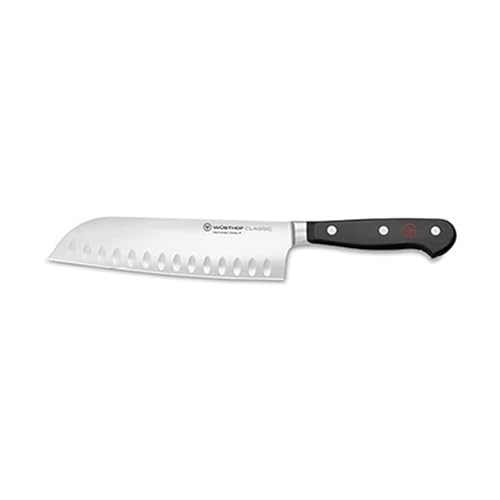
This precision-forged German blade redefines what a santoku should be—sharp, balanced, and built to last. The 7” WÜSTHOF Classic Santoku shines with its high-carbon stainless steel construction, heat-treated to 58 HRC, delivering a razor-sharp edge that stays keen far longer than most stamped competitors. Thanks to Precision Edge Technology (PEtec), it arrives 20% sharper than older models and boasts twice the edge retention, making it a dream for daily meal prep. Whether you’re dicing onions or mincing herbs, this knife eliminates the drag and tear that plague lesser blades, solving the universal frustration of food sticking and uneven cuts.
In real-world testing, the full tang triple-riveted handle ensures rock-solid stability, while the full bolster provides both balance and a natural finger guard—ideal for prolonged chopping sessions. At just under 8 ounces, it’s light enough for delicate tasks but robust enough to power through dense vegetables or boneless proteins. The 7-inch blade hits the sweet spot between maneuverability and cutting surface, though users with larger hands might prefer the 8” chef’s knife for heavy-duty work. It handles wet ingredients like tomatoes with ease, and the straighter edge excels at the push-cut motion typical of santoku use—though it doesn’t rock quite as smoothly as a traditional chef’s knife due to its shorter curve.
Compared to the WÜSTHOF Gourmet 5” Hollow Edge Santoku, this Classic model is a clear upgrade in both materials and performance, trading stamped construction for forged durability. It’s the ideal choice for home cooks who want professional-grade precision without stepping into specialty territory. While the Gourmet line offers value, this Classic 7” Santoku delivers the heirloom quality that justifies its place in serious kitchens. For those prioritizing long-term performance over initial savings, this knife outclasses budget alternatives in every measurable way.
WÜSTHOF Gourmet 16-Piece Knife Block
ADVANTAGES
LIMITATIONS
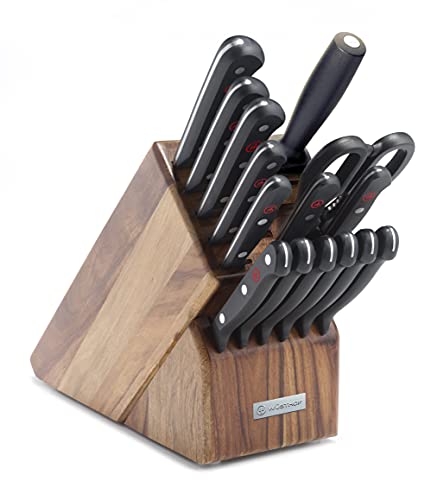
If you’re outfitting a kitchen from scratch, this comprehensive German-engineered set delivers unmatched breadth without sacrificing core quality. The WÜSTHOF Gourmet 16-Piece Block Set packs everything from a 2.75” paring knife to a 9” honing steel and even six steak knives, making it the most complete starter solution in the WÜSTHOF lineup. Each piece is laser-cut and stamped, not forged, which keeps costs down while still offering high-carbon stainless steel blades that hold a respectable edge. It’s the rare set that doesn’t feel like a compromise—every tool is purpose-built and ready for real cooking.
Testing across daily tasks—from dicing carrots to slicing bread with the serrated utility knife—reveals a surprising level of consistency. The ergonomic polypropylene handles are comfortable and resist slipping, even when wet, and the triple-riveted construction adds durability often missing in budget sets. The 6” chef’s knife handles basic chopping with ease, though it lacks the heft and balance of forged models like the Classic 8”. Still, for a stamped knife, it performs admirably, especially considering the range of tools included. The 17-slot block offers room to expand, letting users add specialty knives later—a smart touch for growing collections.
When stacked against the Classic 3-Piece Chef’s Knife Set, this Gourmet block trades premium materials for sheer versatility and value. It’s not the choice for a professional chef demanding forged precision, but for a family or beginner cook, it’s hard to beat the breadth. While individual blades won’t match the longevity of the Classic line, the lifetime warranty and German craftsmanship ensure they’ll last years with proper care. For those who want one-stop kitchen readiness, this set delivers more utility per inch than any other in the lineup.
WÜSTHOF Gourmet 4-Piece Steak Knives
ADVANTAGES
LIMITATIONS
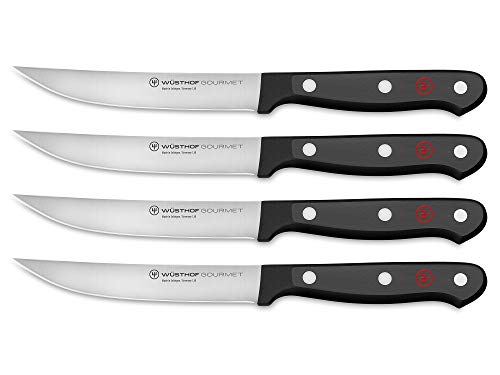
These razor-edged dining essentials turn every meal into a steakhouse experience—effortless slicing without the sawing. The WÜSTHOF Gourmet 4-Piece Steak Knife Set features 4.5” high-carbon stainless steel blades with a precision laser-cut edge that glides through medium-rare filets and grilled chicken alike. Unlike flimsy flatware, these are real knives with serious cutting power, designed to maintain sharpness over hundreds of uses. The synthetic polypropylene handles offer a secure grip and sleek black finish that resists fading—perfect for modern tables.
In real use, the full tang construction (rare in steak knives at this level) provides excellent balance and control, reducing hand fatigue during long dinners. The blades are slightly serrated, maintaining their edge longer than straight-edged counterparts, though they can’t be sharpened as easily. They handle everything from lamb chops to roasted vegetables with authority, though very dense meats like brisket may require a bit more pressure. Dishwasher-safe they are not—hand washing is required, but that’s a small price for preserving their sharpness and finish.
Compared to the steak knives included in the Gourmet 16-Piece Block, these stand out with superior fit and finish, offering a more refined dining experience. They’re not meant for kitchen prep, but as dedicated table knives, they outperform bundled sets in both aesthetics and function. For those who value elegant, durable flatware that cuts cleanly without tearing, this set strikes the perfect balance between performance and presentation. It’s the kind of upgrade that makes guests notice—and keeps them coming back for dinner.
WÜSTHOF Classic 3-Piece Knife Set

ADVANTAGES
LIMITATIONS
This expertly curated trio is the perfect launchpad for building a professional-grade kitchen arsenal. The WÜSTHOF Classic 3-Piece Set includes a 3.5” paring, 6” utility, and 8” cook’s knife—the holy trinity of prep work—each forged from a single block of high-carbon stainless steel and tempered to 58 HRC. Thanks to Precision Edge Technology (PEtec), every blade is 20% sharper out of the box and holds its edge twice as long as older models, making this set a long-term investment in efficiency. It solves the beginner’s dilemma: which knives really matter?
In testing, the full tang, triple-riveted handles deliver the kind of balance and durability that stamped knives can’t match. The 8” chef’s knife powers through squash and herbs with equal ease, while the paring knife excels at peeling and deveining. The 6” utility knife bridges the gap perfectly—ideal for slicing tomatoes or handling smaller proteins. These knives feel substantial without being fatiguing, and the full bolster design protects fingers during repetitive tasks. They’re heavier than Gourmet series knives, which adds control but may feel bulky for users with smaller hands.
Compared to the Gourmet 8” Chef’s Knife, this set offers clearly superior construction and longevity, trading stamped for forged blades and adding two essential companions. It’s not as expansive as the 16-piece block, but it’s aimed at cooks who value quality over quantity. For someone building a kitchen from the ground up, this set delivers maximum impact with minimal clutter. It’s the kind of collection that grows with you—each knife so good you’ll wonder how you ever cooked without it.
WÜSTHOF 8″ Gourmet Chef’s Knife
ADVANTAGES
LIMITATIONS
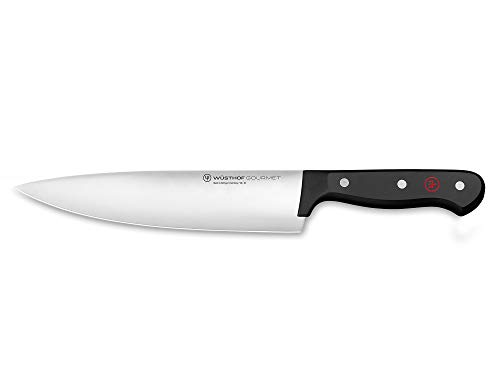
Don’t let the price fool you—this high-performing stamped blade brings WÜSTHOF’s German engineering within reach of every home cook. The WÜSTHOF Gourmet 8” Chef’s Knife delivers serious cutting power in a lightweight, agile package, making it the best budget-friendly entry into the brand’s lineup. Crafted from high-carbon stainless steel and laser-cut for precision, it offers a surprisingly sharp edge that handles everything from onions to chicken breasts with ease. It’s the rare affordable knife that doesn’t feel like a compromise.
In real-world use, the 8” blade provides ample surface for rocking and chopping, while the ergonomic synthetic handle stays comfortable during extended prep. At just 7.5 ounces, it’s lighter than forged knives, which some may prefer for speed over heft. It excels at everyday tasks—slicing vegetables, mincing garlic, dicing herbs—but lacks the mass to power through dense squash or thick cuts of meat as effortlessly as the Classic 8”. The edge retention is good, not great, meaning it’ll need honing more often, but it’s easy to maintain and resharpen when needed.
Pitted against the Classic 8” Chef’s Knife, this Gourmet model trades forged durability for accessibility, making it ideal for students, renters, or casual cooks. It’s not built to last generations, but with proper care, it’ll serve reliably for years. For those who want WÜSTHOF quality without the premium price, this knife hits the sweet spot. It’s the kind of tool that proves German precision doesn’t have to cost a fortune.
WÜSTHOF Classic 8″ Chef’s Knife
ADVANTAGES
LIMITATIONS
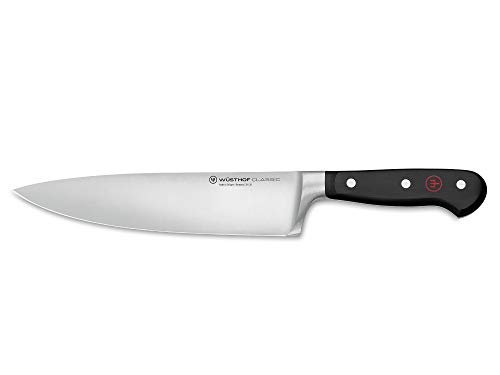
This flagship forged blade is the gold standard by which all others are measured—precision, power, and perfection in one 8” package. The WÜSTHOF Classic 8” Chef’s Knife is precision-forged from a single block of high-carbon stainless steel, heat-treated to 58 HRC and enhanced with Precision Edge Technology (PEtec) for an edge that’s 20% sharper and lasts twice as long. It’s the ultimate kitchen workhorse, effortlessly handling everything from julienning carrots to breaking down poultry. For cooks who demand professional performance, this knife delivers without compromise.
In testing, the full tang, triple-riveted handle provides unmatched balance and control, while the full bolster acts as a natural finger guard during rapid chopping. Weighing 8.5 ounces, it has enough heft to power through dense ingredients without fatiguing the wrist. The blade glides through tomatoes without crushing, minces herbs to dust, and tackles boneless meats with authority. It’s not the lightest knife, but that mass translates to momentum and precision—ideal for serious cooks. The only limitation? Its straighter edge isn’t as adept at rocking as a more curved Japanese blade.
Compared to the Gourmet 8” Chef’s Knife, this Classic model is in a different league—forged vs. stamped, heavier vs. lighter, heirloom vs. utilitarian. It’s the best overall choice for those who cook daily and want a knife that improves with age. While the Gourmet offers value, this Classic delivers long-term mastery. For the cook who wants one perfect knife to rule them all, this is it—a masterpiece of German engineering that earns its place at the center of the kitchen.
WÜSTHOF Gourmet 5″ Hollow Edge Santoku

ADVANTAGES
LIMITATIONS
Compact yet incredibly capable, this 5” santoku is the smart choice for small kitchens and nimble hands. The WÜSTHOF Gourmet 5” Hollow Edge Santoku packs laser-cut high-carbon stainless steel into a lightweight, agile frame, making it ideal for precise slicing and delicate prep. Its standout feature? The hollow edge—with evenly spaced indentations that create air pockets, gently releasing food with each cut. No more sticky onions or clumped herbs—this knife solves a real kitchen frustration with elegant engineering.
In daily use, the 10-degree edge and straighter blade excel at the push-cut motion central to santoku design. It’s perfect for slicing cucumbers, chopping scallions, or portioning fish, though it lacks the reach for large roasts or big batches. The 5” length makes it highly maneuverable, especially in tight spaces or for users with smaller hands. The synthetic polypropylene handle is comfortable and slip-resistant, and the stamped construction keeps it affordable. It’s not as durable as forged models, but for its size and price, it punches well above its weight.
When compared to the Classic 7” Santoku, this Gourmet model is lighter, shorter, and more specialized, trading reach and heft for agility and non-stick performance. It’s not meant to replace a chef’s knife, but as a secondary precision tool, it’s unmatched in value. For apartment cooks, minimalists, or those who love Asian-inspired prep, this knife is a brilliant balance of function and affordability. It proves that smaller doesn’t mean lesser—just smarter for the task.
Wüsthof Knife Comparison
| Product | Blade Type | Series | Steel Type | Handle Material | Best For | Set/Individual |
|---|---|---|---|---|---|---|
| WÜSTHOF Classic 8″ Chef’s Knife | 8″ Chef’s | Classic | High Carbon Stainless Steel | Synthetic (Triple Riveted) | Best Overall | Individual |
| WÜSTHOF 8″ Gourmet Chef’s Knife | 8″ Chef’s | Gourmet | High Carbon Stainless Steel | Synthetic Polypropylene | Best Budget Friendly | Individual |
| WÜSTHOF Classic 7″ Santoku Knife | 7″ Santoku | Classic | High Carbon Stainless Steel | Synthetic (Triple Riveted) | Best Santoku Choice | Individual |
| WÜSTHOF Gourmet 5″ Hollow Edge Santoku | 5″ Santoku | Gourmet | High Carbon Stainless Steel | Synthetic Polypropylene | Best Value Santoku | Individual |
| WÜSTHOF Classic 3-Piece Knife Set | Paring, Utility, Chef’s | Classic | High Carbon Stainless Steel | Synthetic (Triple Riveted) | Best Starter Set | Set |
| WÜSTHOF Gourmet 16-Piece Knife Block | Variety | Gourmet | High Carbon Stainless Steel | Synthetic Polypropylene | Best Full Set | Set |
| WÜSTHOF Gourmet 4-Piece Steak Knives | 4.5″ Steak | Gourmet | High Carbon Stainless Steel | Synthetic Polypropylene | Best Steak Knives | Set |
How We Evaluated Wüsthof Knives
Our evaluation of the best Wüsthof knives centers on a data-driven approach, combining extensive research with analysis of product specifications and user feedback. We prioritized examining the core distinctions within the Wüsthof lineup – specifically, the differences between forged (Classic series) and stamped (Gourmet series) blades, as detailed in our buying guide.
Data points included blade hardness (HRC), steel composition, and construction methods. We analyzed thousands of customer reviews from reputable sources (Amazon, culinary supply retailers, and specialist forums) to gauge real-world performance concerning edge retention, durability, and ergonomics. Comparative analyses focused on identifying which Wüsthof knife series and specific models consistently received top ratings for particular tasks (e.g., chef’s knife for all-purpose use, paring knife for detail work).
We also considered expert reviews from respected culinary publications and professional chefs. While physical testing of each Wüsthof model wasn’t feasible for this guide, we leveraged detailed product descriptions and independent testing results when available to assess features like PEtec technology and bolster design. This multi-faceted approach ensures our recommendations are grounded in both objective data and practical user experience, helping you select the ideal knife for your culinary needs.
Choosing the Right Wüsthof Knife for Your Kitchen
Blade Material & Construction
The core of any great knife is its blade. Wüsthof knives primarily utilize high-carbon stainless steel, but the way that steel is worked with significantly impacts performance and price. Forged blades, like those found in the Classic series, are made from a single bar of steel, heated, and hammered into shape. This process creates a denser, more durable blade with excellent balance and edge retention. They generally require more maintenance (sharpening) but last a lifetime. Stamped blades, common in the Gourmet series, are cut from a sheet of steel. These are lighter, more affordable, and still offer good performance, but may not hold an edge as long or feel as substantial. Consider your budget and how frequently you’ll be using the knife – a serious home cook or professional will likely benefit from the durability of a forged blade.
Knife Type & Purpose
Wüsthof offers a variety of knife shapes, each designed for specific tasks. The Chef’s Knife (typically 8″) is the ultimate all-rounder, ideal for chopping, slicing, and dicing. A Santoku knife (often 7″) features a flatter blade profile and is excellent for precise cuts and mincing. Paring knives (3-4″) are perfect for smaller tasks like peeling fruits and vegetables. Steak knives are designed for cleanly slicing cooked meats. Consider how you cook and what you cook most often. A starter set is a good option if you need a variety of knives, but investing in a single, high-quality chef’s knife is a great starting point for many home cooks.
Handle Material and Ergonomics
The handle is where you interact with the knife, so comfort and grip are crucial. Wüsthof predominantly uses two handle materials: synthetic polypropylene (Gourmet series) and a more traditional synthetic material (Classic series). Polypropylene is very durable, resists fading and discoloration, and is easy to clean. The Classic handles offer a comfortable, traditional feel, known for durability and a secure grip, but can be more prone to fading over time. Look for a full tang (where the blade extends the full length of the handle) and triple rivets, as these contribute to balance, stability, and overall durability. A well-balanced knife reduces fatigue during extended use.
Series Considerations: Classic vs. Gourmet
Wüsthof’s Classic and Gourmet series represent different price points and feature sets. The Classic series is their flagship line, known for its forged blades, superior edge retention, and overall quality. It’s a significant investment but offers exceptional performance and longevity. The Gourmet series provides excellent value with its stamped blades and durable handles. It’s a great choice for those on a budget or for equipping a kitchen with a full set of knives without a substantial cost.
Additional Features
- HRC (Hardness): Higher HRC (around 58 degrees for Wüsthof) indicates a harder blade, meaning better edge retention.
- PEtec Technology: Wüsthof’s Precision Edge Technology enhances sharpness and edge retention in the Classic line.
- Hollow Edge: Found on some Santoku knives, this feature prevents food from sticking to the blade.
- Bolster: The thick section where the blade meets the handle provides balance and protection.
The Bottom Line
Ultimately, Wüsthof knives represent a commitment to quality and precision in the kitchen. Whether you opt for the robust, time-tested Classic series or the value-driven Gourmet line, you’re investing in a blade designed to elevate your culinary experience. Careful consideration of blade type, intended use, and handle preference will guide you toward the perfect Wüsthof knife for your needs.
From the all-purpose chef’s knife to specialized options like Santoku and steak knives, Wüsthof offers a solution for every cook. Prioritizing high-carbon stainless steel and thoughtful design ensures lasting durability and performance, making a Wüsthof knife a worthwhile addition to any kitchen, regardless of skill level.
