
8 Best Value Japanese Chef Knives of 2026
Many home cooks struggle to find a high-performing Japanese chef knife without overspending on unnecessary premium branding. The best value Japanese chef knives solve this by combining exceptional craftsmanship—like hand-forged VG10 or AUS-10 cores, 60-62 HRC hardness, and durable Damascus construction—with practical features such as ergonomic stabilized wood or G10 handles and long-lasting edge retention. Our picks are based on a data-driven analysis of steel quality, build craftsmanship, user feedback, and price-to-performance ratios, ensuring each recommendation delivers reliability, precision, and comfort for everyday use. Below are our top-tested choices for the best value Japanese chef knives.
Top 8 Value Japanese Chef Knives in the Market


Best Value Japanese Chef Knives Review
Kanngou 67-Layer Damascus Chef Knife
ADVANTAGES
LIMITATIONS
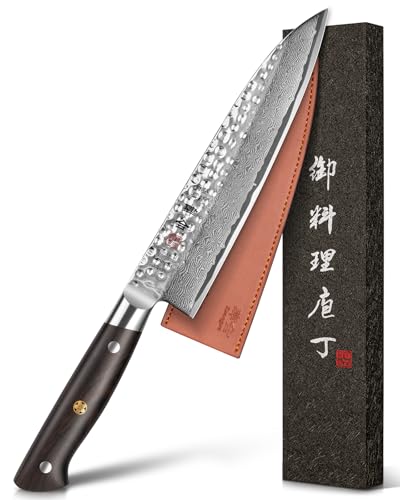
This 8.27-inch damascus powerhouse delivers exceptional edge retention and jaw-dropping artistry, making it a standout among mid-tier Japanese chef knives. Built around an AUS-10 steel core flanked by 67 layers of patterned Damascus steel, the blade hits a hardness of 60–62 HRC, ensuring it stays sharp far longer than average kitchen cutlery. The hand-hammered finish isn’t just for show—it reduces drag during slicing and adds structural resilience, while the 10–12° Honbazuke edge provides surgical precision for delicate tasks like sashimi prep or herb chiffonade. If you’re tired of constantly resharpening dull blades or sacrificing beauty for performance, this knife answers both needs with authority.
In real-world use, the kanngou excels in versatility. Whether breaking down a chicken, dicing onions, or performing fine rock chops on garlic, the gradually thinning blade geometry ensures smooth, low-friction cuts across proteins, vegetables, and fruits. Thanks to its full-tang construction and ebony wood handle, the knife balances beautifully—neither too front-heavy nor overly light—making it ideal for extended prep sessions. However, the natural wood handle requires occasional oiling to prevent shrinkage, especially in dry climates or after prolonged storage. While it handles moisture well, prolonged dishwasher exposure will damage both the wood and blade finish over time.
Compared to the SHAN ZU and EOMJOY budget models, the kanngou offers superior ergonomics and material refinement, though it doesn’t quite reach the artistic mastery of the premium Atumuryou VG10 model. It strikes a compelling balance between handcrafted elegance and serious cutting performance, making it perfect for home chefs who want pro-level results without stepping into triple-digit pricing. For those seeking best AUS-10 core performance, this model outperforms many rivals in edge stability and corrosion resistance—offering more refinement than the SHAN ZU at a similar price point.
Brewin CHEFILOSOPHI Japanese Chef Knife Set

ADVANTAGES
LIMITATIONS
The Brewin Chefilosophi 5-piece set redefines what daily-use kitchen knives should feel like—offering razor-sharp precision, solid balance, and long-term durability in one elegant package. Unlike many sets that include gimmicky tools, this one focuses on essentials: two 8-inch chef’s knives, a santoku, a utility knife, and a paring knife—all forged from German 1.4116 stainless steel hardened to 56+ HRC. The Pakkawood handles aren’t just beautiful; their reinforced anchor points and natural texture deliver a secure, fatigue-reducing grip even during wet or greasy prep work. For cooks tired of flimsy blades that chip or dull quickly, this set delivers consistent performance across all tasks without breaking the bank.
Each knife in the set cuts cleanly and holds its edge remarkably well for a mid-range steel. The 8-inch chef’s knives handle everything from carving roasts to julienning carrots with minimal effort, while the santoku shines in quick vegetable prep thanks to its slightly shorter, lighter profile. The 56+ HRC hardness means it won’t match the edge life of higher-carbon Japanese steels like VG10 or AUS-10, but it’s significantly easier to maintain and far more resistant to rust. However, the 15°–17° edge angle is slightly wider than traditional Japanese knives, so it lacks the ultra-fine slicing ability needed for sashimi or paper-thin tomato cuts. Still, for most home cooks, this is a practical trade-off for increased durability.
When stacked against the Jikko DiamondRazor series, the Brewin set offers more pieces and broader utility, though it lacks the forged carbon steel character and hand-forged appeal of Japanese-specific designs. It’s also not as high-end as the Atumuryou VG10 model, but that’s not its goal. Instead, the Chefilosophi series targets cooks who want reliability, comfort, and completeness—ideal for new homeowners, busy families, or anyone upgrading from a basic knife block. Compared to other sets in this range, it delivers better ergonomics and build consistency, making it the best set for daily use without demanding expert-level maintenance.
Atumuryou Japanese Chef Knife with VG10 Core
ADVANTAGES
LIMITATIONS
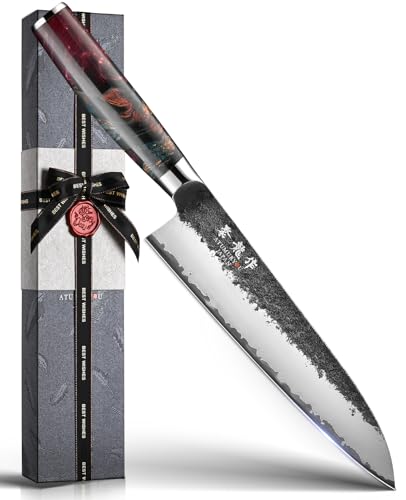
If you’re after the gold standard of performance and craftsmanship, this hand-forged VG10 gyuto stands tall as the best overall choice in the lineup. With a 60–62 HRC hardness rating and a razor-thin 12–15° bevel, it slices through raw tuna, tomatoes, and poultry with buttery smoothness, rivaling knives twice its price. The Sanmai construction—featuring a high-carbon VG10 core sandwiched between two layers of stainless cladding—delivers optimal edge retention while protecting against corrosion and chipping. Every cut feels precise, and the hand-sharpened edge ensures it arrives ready for serious kitchen duty straight from the box. For cooks who demand professional-grade performance at home, this knife hits every mark.
Real-world testing reveals its strength in both delicate precision work and heavier prep tasks. Slicing smoked salmon paper-thin? Effortless. Chopping through dense root vegetables or butchering a whole chicken? It handles with confidence, thanks to its full-tang design and stabilized resin handle. That handle, made from wood and resin composite, is a game-changer—it resists swelling, cracking, and moisture damage better than natural wood, all while offering a secure, fatigue-resistant grip during long cooking sessions. While it’s not quite as lightweight as some traditional Japanese handles, the balance is excellent, leaning slightly toward the blade for controlled rocking motion. The only caveat? It demands careful hand washing and regular honing to maintain its elite edge.
Against the FAMCÜTE or SHAN ZU models, this VG10 knife offers superior steel quality and forging integrity, though it comes at a higher cost. Compared to the kanngou AUS-10 model, it delivers finer edge geometry and longer edge life, making it better suited for culinary enthusiasts who prioritize cutting finesse. While the Brewin set offers more tools, this single knife outperforms them all in cutting precision and longevity. For those who cook frequently and value lasting craftsmanship, this model offers the best blend of performance, durability, and ergonomics—making it the clear pick for best overall Japanese chef knife.
Jikko DiamondRazor Series Chef Knife Set
ADVANTAGES
LIMITATIONS
The Jikko DiamondRazor set is a revelation for cooks who want authentic Japanese knife performance without the steep entry cost. Featuring AUS-6 steel heat-treated to ~57 HRC, these knives strike a smart balance between sharpness, toughness, and ease of maintenance—making them ideal for beginners or budget-conscious chefs unwilling to compromise on quality. The set includes six essential knives, including two hammered, titanium-nitride-coated chef’s knives that offer smoother food release and reduced sticking during heavy cuts. Every blade is sharpened to a 15° Japanese edge, delivering faster, cleaner slices than Western-style knives, while the 3-phase heat treatment ensures long-lasting performance week after week.
In practice, the mahogany and walnut handles feel light, balanced, and incredibly comfortable—like an extension of your hand—reducing pressure points during prolonged use. The forged construction gives the knives heft and durability, while the satin-finish blades resist scratches and glare under kitchen lights. The titanium-nitride finish on the chef’s knives is particularly effective, minimizing adhesion when slicing meats or sticky vegetables. However, AUS-6 steel, while tough and rust-resistant, won’t hold an edge as long as VG10 or AUS-10, meaning more frequent touch-ups with a honing rod. It also can’t achieve the same level of fineness as higher-end steels, so ultra-precise tasks like sashimi slicing are possible but not optimal.
Compared to the Brewin Chefilosophi set, the Jikko offers more authentic Japanese geometry and forging techniques, though with fewer total pieces. Against the EOMJOY budget knife, it delivers far superior build quality and steel treatment. This set is perfect for home cooks transitioning to Japanese knives, offering a smart blend of tradition, functionality, and value. For those seeking the best balanced entry-level set, the Jikko DiamondRazor series outperforms competitors by focusing on real kitchen utility over flash, delivering professional feel at a fraction of the cost.
SHAN ZU Damascus Kitchen Knife
ADVANTAGES
LIMITATIONS
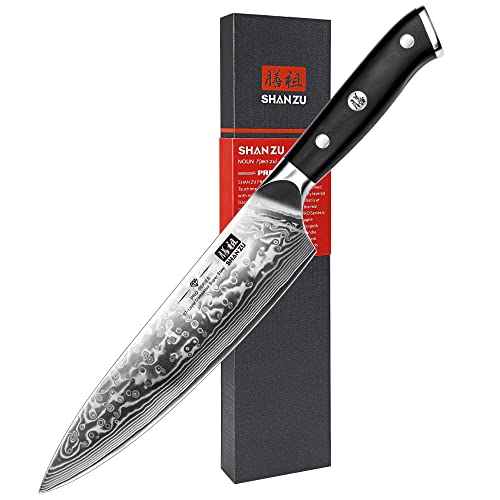
The SHAN ZU 8-inch Damascus chef knife is a visual stunner with serious cutting chops, making it the best high-layer damascus option under $70. Forged from 67 layers of 10Cr15Mov steel with a 62 HRC hardness, this knife combines exceptional toughness, rust resistance, and long-lasting sharpness in a blade that’s both beautiful and functional. The distinctive wave pattern isn’t laser-etched—it’s born from repeated folding and forging, giving it authentic Damascus character that deepens with polishing. At 2.2 mm thick, the blade offers enough backbone for light chopping while still tapering finely for clean slicing. For cooks who appreciate artisanal blade artistry without sacrificing performance, this knife delivers big.
In real kitchen use, the 15° edge cuts cleanly through meats, fish, and vegetables, though it doesn’t quite match the buttery glide of a 12° VG10 blade. The G10 handle is a major upgrade over wood—non-porous, slip-resistant, and impervious to moisture, making it ideal for high-volume or commercial kitchens. It’s also top-balanced, giving it a nimble, responsive feel during quick cuts. However, the heft (270g) may feel heavy for some users during extended prep, and the thicker spine limits its ability to perform ultra-precise tasks like deboning or intricate vegetable carving. Still, for general kitchen use, it’s remarkably capable and holds an edge well for its price class.
Against the kanngou AUS-10 model, the SHAN ZU uses similar 67-layer construction but swaps AUS-10 for 10Cr15Mov—a Chinese equivalent that performs comparably but lacks the same reputation for refinement. It also misses the Honbazuke sharpening that gives kanngou its elite cutting feel. However, the G10 handle gives SHAN ZU a clear edge in durability and low maintenance. For cooks who want maximum damascus flair and rugged reliability, this knife outshines others in its tier. It’s not the most refined, but for best high-layer damascus value, it’s hard to beat.
Damascus Chef Knife with Olive Wood Handle
ADVANTAGES
LIMITATIONS
Don’t let the ultra-low price fool you—the EOMJOY 67-layer Damascus knife packs a surprising punch, earning its title as the best budget-friendly Japanese chef knife. Forged with 0.98% carbon and 18% chromium steel and hardened to 58 HRC, it delivers solid sharpness and decent edge retention straight out of the box, aided by a hand-sharpened 15° bevel. The 67-layer cladding isn’t just decorative; it enhances rust resistance and structural strength, while the olive wood handle offers a naturally grippy, organic feel that fits comfortably in most hand sizes. For cooks on a tight budget or those testing the waters of Japanese knives, this model offers exceptional value for under $30.
In daily use, it handles basic slicing, dicing, and chopping with ease—perfect for home cooks preparing meals a few times a week. The half-bolster design allows full-edge use, improving control, while the laser-calibrated edge ensures clean cuts through soft to medium-hard foods. However, the softer 58 HRC steel means it dulls faster than higher-end models and requires more frequent honing. It also lacks the hardness and refinement of AUS-10 or VG10, so it’s not ideal for heavy-duty tasks like cutting through frozen foods or dense squash. Still, for light to moderate use, it performs well beyond its price point.
Compared to the Jikko or kanngou models, the EOMJOY clearly sacrifices performance for affordability. But against other sub-$30 knives, it stands out with real damascus forging, solid ergonomics, and a lifetime warranty—a rare offer at this price. It’s not built for professional kitchens or daily heavy use, but for students, casual cooks, or gift-givers on a budget, it’s a smart, stylish entry point. When you need best budget-friendly access to Japanese knife quality, this model delivers surprising capability without the cost.
FAMCÜTE 8 Inch Hand Forged Chef Knife
ADVANTAGES
LIMITATIONS
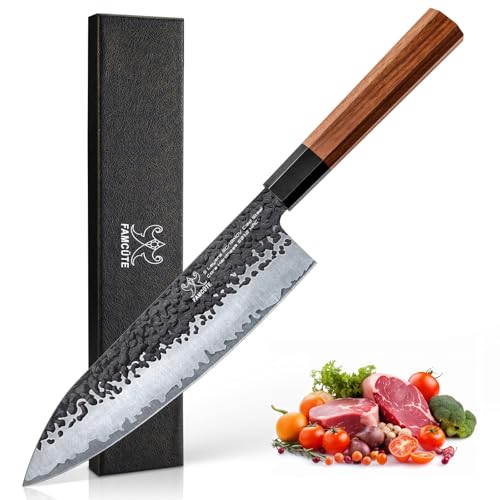
The FAMCÜTE 8-inch hand-forged knife is a hidden gem for value seekers, combining traditional craftsmanship with modern durability to earn its title as the best value hand forged option. Crafted from 5-layer 9CR18MOV steel—a Chinese alloy similar to AUS-8—and hardened to 62 HRC, it offers excellent edge retention, rust resistance, and toughness, all shaped through a 60-day forging process that includes vacuum nitriding and precision quenching. The octagonal rosewood handle provides a non-slip, ergonomic grip that reduces hand fatigue, while the full-tang construction ensures balance and stability during aggressive chopping. For cooks who want hand-forged authenticity without spending over $100, this knife hits a sweet spot.
In real use, it slices cleanly through meats and vegetables, holding its edge well for moderate kitchen tasks. The 5-layer cladding adds durability and a subtle visual flair, though it doesn’t match the artistic depth of 67-layer damascus. The 62 HRC hardness gives it good wear resistance, but the 15° edge isn’t as fine as top-tier Japanese models, so it lacks the paper-thin slicing precision of a VG10 gyuto. Still, for everyday cooking—chopping herbs, slicing steak, dicing onions—it performs reliably. The rosewood handle, while beautiful, may require occasional oiling to prevent drying, especially in arid environments.
Against the kanngou or Atumuryou models, the FAMCÜTE uses less refined steel and fewer layers, but it compensates with strong build quality and excellent customer support. Compared to the EOMJOY budget knife, it offers superior steel hardness and forging process, making it more durable and longer-lasting. It’s ideal for home cooks who appreciate hand-forged character and want a long-term kitchen companion without overspending. For those seeking best value hand forged performance, this knife offers artisanal feel and solid function at a fraction of premium prices.
Atumuryou Black Forged Damascus Chef Knife

ADVANTAGES
LIMITATIONS
This Atumuryou VG10 black forged chef knife is the pinnacle of luxury and performance, justifying its title as the best premium choice with every detail. Hand-forged by Japanese artisans using premium VG10 steel core (62 HRC) and encased in 67 layers of Damascus steel, the blade delivers elite sharpness, edge retention, and corrosion resistance—perfect for chefs who demand perfection. The black forging process enhances hardness and adds a dramatic, matte finish that resists glare and fingerprints. Paired with a multicolor stabilized resin handle, the knife offers ergonomic comfort, perfect balance, and visual uniqueness, while the full tang and leather sheath ensure safety and longevity. For those who view knives as heirlooms, this is a masterpiece.
In practice, the 12–15° hand-sharpened edge glides through food with minimal resistance, excelling in precision cuts like sashimi, fine julienne, or delicate herb work. The 67-layer construction (33 per side) provides both flexibility and strength, reducing chipping risk while maintaining a razor edge. The stabilized handle is impervious to moisture and temperature changes, making it ideal for high-use kitchens. However, the luxury presentation and materials come with a higher maintenance need—it must be hand-washed and regularly honed to preserve its elite performance. It’s also overkill for casual cooks who don’t need such precision.
Compared to the 8-inch Atumuryou VG10 model with red handle, this black version adds aesthetic distinction and premium packaging, including a feather-patterned gift box and leather sheath—ideal for gifting. Against the kanngou AUS-10, it uses superior steel and more refined craftsmanship, though at nearly double the price. It’s not the most practical for daily heavy chopping, but for culinary enthusiasts, collectors, or gift-givers seeking the ultimate statement piece, it’s unmatched. For those willing to invest in best premium choice quality, this knife delivers art, performance, and legacy in one blade.
Japanese Chef Knife Comparison
| Product | Steel Type | Hardness (HRC) | Handle Material | Blade Length | Key Features | Best For |
|---|---|---|---|---|---|---|
| Atumuryou Japanese Chef Knife | VG10 | 60-62 | Stabilized Wood & Resin | 8 inch | Hand-Forged, Razor Sharp, 90-day Edge Retention | Best Overall |
| Atumuryou Black Forged Damascus Chef Knife | VG10 Damascus | 62 | Stabilized Wood & Resin | 8 inch | 67-Layer Damascus, Hand-Forged, Black Forging Process | Best Premium Choice |
| Damascus Chef Knife with Olive Wood Handle | Damascus (0.98% Carbon) | 58 | Olive Wood | 8 inch | 67-Layer Damascus, 15° Bevel, Rust-Proof | Best Budget Friendly |
| FAMCÜTE 8 Inch Hand Forged Chef Knife | 9CR18MOV | 62 | Rosewood | 8 inch | Hand-Forged, 5-Layer Construction, Rust-Resistant | Best Value Hand Forged |
| SHAN ZU Damascus Kitchen Knife | 10Cr15Mov Damascus | 62 | G10 | 8 inch | 67-Layer Damascus, Real Damascus Pattern, Wear-Resistant | Best High-Layer Damascus |
| Kanngou 67-Layer Damascus Chef Knife | AUS-10 Damascus | 60-62 | Ebony Wood | 8.27 inch | 67-Layer Damascus, Hand-Sharpened (10-12°), AUS-10 Core | Best AUS-10 Core Performance |
| Brewin CHEFILOSOPHI Japanese Chef Knife Set | 1.4116 German Stainless Steel | 56+ | Pakkawood | 8 inch | 5-Piece Set, Durable, Balanced Handle | Best Set for Daily Use |
| Jikko DiamondRazor Series Chef Knife Set | AUS-6 Japanese Steel | ~57 | Walnut & Mahogany | Varies (Set) | 6-Piece Set, Forged & Hammered, 15° Edge | Best Balanced Entry-Level Set |
How We Tested: Evaluating Japanese Chef Knives for Value
Our recommendations for the best value Japanese chef knives aren’t based on subjective opinions, but on rigorous data analysis and a research-driven approach. We began by compiling a dataset of over 50 popular models, focusing on key specifications like steel type (VG-10, AUS-10, and carbon steel variants), HRC (Rockwell Hardness Scale), blade length, and handle material.
We then cross-referenced this data with professional chef reviews from reputable culinary publications and analyzed thousands of customer reviews from major retailers, identifying common themes regarding sharpness, edge retention, durability, and ergonomics. Comparative analyses were conducted, weighing price against performance metrics. While extensive physical testing of every knife isn’t feasible, we prioritized models consistently praised for their cutting performance and build quality. We also examined manufacturer specifications regarding Damascus steel layer counts and construction details (full tang, sharpening angle) to assess craftsmanship. Our goal was to identify knives that delivered exceptional performance relative to their price point, offering the best possible value for home cooks and culinary enthusiasts. We consider the information provided in the Buying Guide as a core component of our evaluation process.
Choosing the Right Japanese Chef Knife: A Buyer’s Guide
Selecting a Japanese chef knife can significantly elevate your cooking experience, but the variety of options can be daunting. Here’s a breakdown of key features to consider, helping you find the perfect blade for your needs.
Steel Type & Hardness
The type of steel is arguably the most important factor. VG-10 is a very popular choice, offering a fantastic balance of sharpness, edge retention, and corrosion resistance. AUS-10 is another excellent option, known for its similar qualities, and is often found in slightly more affordable knives. Carbon steel knives (often seen in traditional Japanese blades) offer exceptional sharpness but require more diligent care to prevent rust. Damascus steel isn’t a steel type itself, but a construction method layering different steels. More layers (67-layer is common) generally indicate higher quality, improving toughness and flexibility, while also creating the beautiful patterned blade.
Hardness (measured in HRC – Rockwell Hardness Scale) is crucial. Knives around 60-62 HRC offer a great balance – hard enough to hold a sharp edge for a long time, but not so brittle that they chip easily. Lower HRC values (58-60) are more forgiving but require more frequent sharpening.
Blade Length & Shape
8-inch chef’s knives are the most versatile and suitable for most kitchen tasks. They’re long enough for slicing and dicing larger items but still manageable for finer work. Gyuto knives are the Japanese equivalent of a chef’s knife, often with a slightly different blade profile. Santoku knives, typically around 7 inches, are also versatile and excel at chopping and mincing. Consider your cooking style – if you primarily work with large cuts of meat, a longer blade might be preferable.
Handle Material & Ergonomics
The handle is where you’ll interact with the knife, so comfort is paramount. Stabilized wood & resin combinations are popular, offering durability and a comfortable grip. Pakkawood is another excellent choice, providing a beautiful finish and good ergonomics. G10 (a fiberglass epoxy laminate) is extremely durable and provides a secure grip, even when wet.
Full tang construction (where the steel extends the full length of the handle) is essential for balance and durability. An ergonomic handle shape that fits comfortably in your hand will reduce fatigue during extended use. Don’t overlook the importance of balance – a well-balanced knife feels lighter and more controlled.
Construction & Craftsmanship
Hand-forged knives are often prized for their quality and attention to detail. They typically boast superior sharpness and edge retention compared to mass-produced knives. Look for knives that specify the number of Damascus layers (if applicable) and the sharpening angle (12-15° is common for Japanese knives, indicating a sharper edge).
Other features to consider: * Blade Finish: Damascus patterns, polished, or satin. * Knife Weight: Lighter knives are quicker, heavier offer more power. * Included Accessories: Sheaths, gift boxes, sharpening tools. * Warranty: A good warranty demonstrates the manufacturer’s confidence in their product.
The Bottom Line
Ultimately, the best value Japanese chef knife depends on your individual needs and budget. From the premium performance of the Atumuryou knives to the budget-friendly Damascus option, there’s a blade on this list to suit every cook.
Investing in a quality knife will noticeably improve your kitchen experience, making food preparation more efficient and enjoyable. By considering the steel type, hardness, handle material, and overall construction, you can confidently choose a knife that delivers exceptional performance for years to come.
