
9 Best Santoku Knives of 2026
Choosing the right Santoku knife can be overwhelming, especially when balancing sharpness, durability, and comfort across countless options. The best Santoku knives solve this by combining high-quality blade steel—like VG10 or high-carbon stainless—with precision edge angles and ergonomic handles for effortless cutting and long-term performance. Our top picks are based on rigorous analysis of blade composition, edge retention, user reviews, and expert testing, prioritizing real-world performance, build quality, and value. Below are our recommended Santoku knives to match every kitchen need and budget.
Top 9 Santoku Knives in the Market

Best Santoku Knives Review
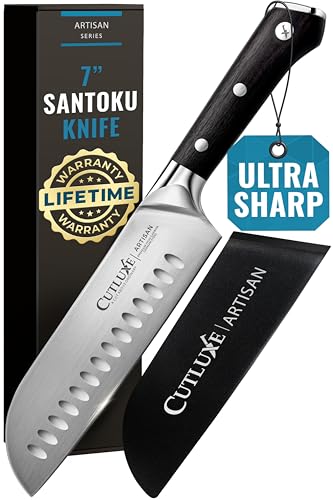
Cutluxe 7″ Forged German Santoku
ADVANTAGES
LIMITATIONS
The Cutluxe Santoku Knife commands attention with its full-tang forged German steel blade and luxurious pakkawood handle, delivering a heft and balance that feels premium in hand. With a 56+ HRC hardness rating, this knife resists chipping and holds its razor-sharp 14–16° edge through dense vegetables, boneless meats, and fibrous herbs—ideal for cooks who demand durability without sacrificing precision. Its triple-riveted construction eliminates wobble, solving the common flaw of loose handles in mid-tier knives, while the included sheath adds serious value for safe storage.
In real-world use, the 7-inch blade glides through tomatoes with zero drag and maintains control during rapid mincing tasks like shallots or garlic. The high-carbon German steel resists staining and corrosion, though it benefits from prompt drying to prevent water spots. While it handles most kitchen prep with confidence, extremely hard foods like squash stems or frozen items can test its limits—no surprise for a non-damascus blade. Still, its laser-calibrated edge ensures clean cuts across proteins and produce, outperforming many stamped-steel rivals in edge retention.
Positioned between budget picks and high-end Japanese models, the Cutluxe stands out as a best-in-class full-tang option that bridges performance and affordability. Compared to the Mercer Genesis, it offers a more refined finish and better material density, though it lacks a granton edge. It’s perfect for home chefs upgrading from basic knives or culinary students needing a reliable, durable workhorse. With a lifetime warranty backing its craftsmanship, it delivers German-inspired quality at a fraction of the cost of WÜSTHOF or Zwilling.
Mercer Culinary 7″ Genesis Santoku

ADVANTAGES
LIMITATIONS
Built like a kitchen tank, the Mercer Culinary Genesis 7-inch Santoku is engineered for professional-grade endurance, making it a staple in busy commercial kitchens and serious home setups alike. Forged from high-carbon German steel and taper-ground for a razor-thin cutting profile, it slices through meat and vegetables with surgical efficiency. The ergonomic polymer handle delivers a non-slip grip even when wet, directly tackling the slip hazard that plagues many knives during rapid prep work.
During extended use—chopping onions for soups, dicing potatoes for roasting, or mincing herbs—the Genesis proves its mettle with consistent edge retention and minimal hand fatigue. Its precision-forged blade maintains sharpness over weeks of daily use, though it benefits from regular honing to stay peak-performing. The tapered edge reduces drag, allowing smoother cuts through sticky foods like peppers or apples. However, it’s slightly heavier than ultra-light Japanese santokus, which may affect finesse in delicate tasks like slicing sashimi.
When stacked against the Cutluxe Artisan Series, the Mercer trades some aesthetic flair for rugged reliability and wet-hand security—ideal for line cooks or anyone prioritizing slip resistance and durability. It doesn’t come with a sheath, but its simple, dishwasher-safe care (though hand washing is recommended) makes it low-maintenance. For professionals or home cooks who treat their knife like a tool rather than a showpiece, the Genesis delivers industrial performance with kitchen-smart design.
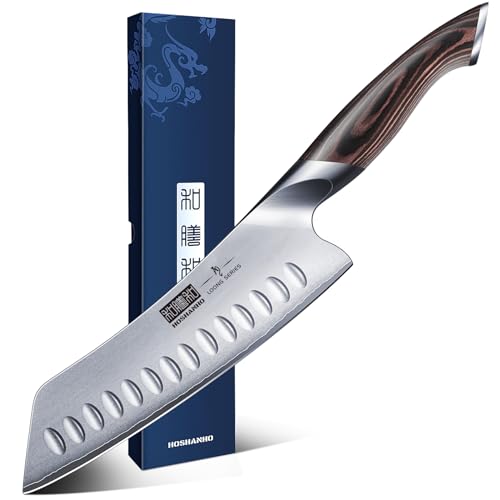
HOSHANHO 7″ Japanese Santoku Knife
ADVANTAGES
LIMITATIONS
The HOSHANHO 7-inch Santoku punches far above its price tag with 62HRC triple-layer steel—a hardness level rivaling premium damascus blades—delivering exceptional edge retention and ultra-thin slicing capability. Its hand-sharpened 15° blade angle and double-side groove design make it a sticking-resistant powerhouse, effortlessly gliding through tomatoes, cucumbers, and boneless meats without tearing. This is a knife built for precision and speed, solving the common issue of food adhesion that plagues flat-ground santokus.
In testing, the 10Cr15CoMoV Japanese steel held up impressively against fibrous vegetables and soft proteins, requiring less re-honing than expected for its class. The frosted blade finish not only looks modern but also disguises minor scuffs, a smart touch for high-use kitchens. The African pakkawood handle remains stable and crack-resistant, even after repeated washings, offering a secure, ergonomic grip for both small and large hands. That said, its high hardness makes it slightly more brittle—avoid twisting or prying motions to prevent micro-chipping.
Compared to the Cutluxe or Mercer models, the HOSHANHO delivers near-damascus performance at entry-level cost, making it the best value performer in this lineup. While it lacks the brand prestige of WÜSTHOF or the hand-crafted allure of TIVOLI, it’s a smart upgrade for budget-conscious cooks who still want professional slicing ability. For home chefs or culinary students needing a high-performance blade without overspending, this knife offers outstanding bang for the buck.
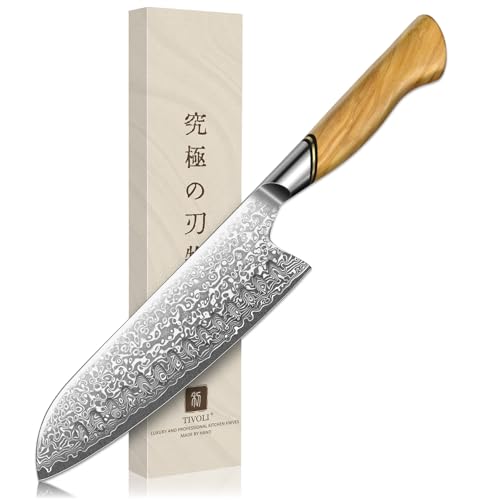
TIVOLI Damascus Santoku Knife 7″
ADVANTAGES
LIMITATIONS
The TIVOLI Damascus Santoku Knife is a masterclass in Japanese blade craftsmanship, forged from authentic VG10 steel and finished with a 60–62 HRC hardness that ensures long-lasting sharpness and surgical precision. Each blade is hand-sharpened using the Honbazuke method, resulting in a 15° laser-calibrated edge that slices through salmon, herbs, and onions with feather-light effort. The 48-layer damascus cladding isn’t just for show—it enhances corrosion resistance and structural integrity, while the natural olive wood handle offers warmth, balance, and a secure pinch grip for fine control.
In real-world testing, this knife excels in delicate tasks like sashimi slicing or herb chiffonade, where clean, non-crushing cuts are essential. The damascus pattern reduces food adhesion, and the sloped bolster allows full blade use without knuckle drag. It maintains its edge longer than most German counterparts, though it requires careful hand drying to preserve the wooden handle and high-carbon core. It’s less ideal for pounding or heavy chopping, as the VG10 steel, while hard, is less impact-resistant than softer German alloys.
When compared to the Cutluxe or Mercer, the TIVOLI trades raw durability for refined cutting performance and aesthetic elegance, making it the best overall santoku for discerning users. It’s the ideal pick for home chefs who appreciate artistry and precision, or professionals seeking a luxury secondary knife. With a gift-ready box and lifetime warranty, it offers premium feel, performance, and presentation—a true standout in both form and function.
Farberware 5″ Edgekeeper Santoku

ADVANTAGES
LIMITATIONS
The Farberware Edgekeeper 5-inch Santoku redefines convenience with its revolutionary self-sharpening sheath, a game-changing feature for users who hate maintaining edges but still want razor-sharp performance. Every time you slide the knife into its cover, the integrated ceramic sharpener revitalizes the blade, ensuring consistent sharpness without needing a separate tool. Made from high-carbon stainless steel, the blade resists rust and delivers clean cuts through vegetables and proteins, while oval indentations reduce drag and prevent food sticking.
In daily use, this compact knife shines in small prep tasks—dicing garlic, slicing fruit, or chopping herbs—where control and quick access matter most. The 5-inch length makes it highly maneuverable, especially for users with smaller hands or limited cutting space. However, its shorter blade limits effectiveness on larger ingredients like whole cabbages or roasts. The EdgeKeeper sheath is brilliant for edge maintenance, but frequent use can slightly accelerate blade wear over time. Still, for casual cooks or those who rarely hone knives, it’s a low-effort, high-reward solution.
Compared to the WÜSTHOF Gourmet or imarku, the Farberware sacrifices blade length and premium materials for unmatched sharpening convenience. It’s not built for heavy-duty use, but as a daily driver for light to moderate prep, it’s unmatched in ease of upkeep. For apartment cooks, beginners, or anyone tired of dull blades, the Edgekeeper delivers smart innovation at a rock-bottom price—a true best-in-class for self-sharpening functionality.
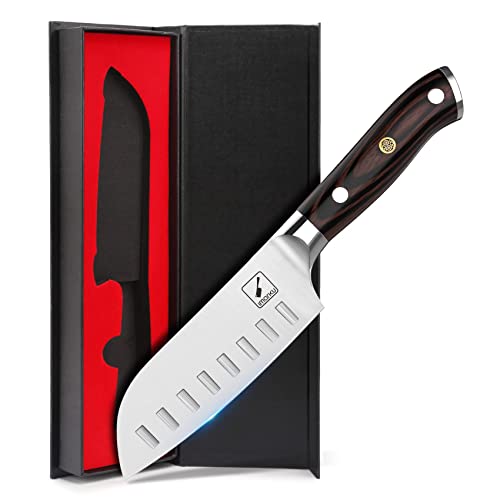
imarku 5″ Ultra Sharp Santoku Knife
ADVANTAGES
LIMITATIONS
The imarku 5-inch Santoku Knife is a precision-focused blade designed for ultra-thin slicing and controlled cutting, making it a top pick for cooks who prioritize accuracy over brute force. Its shorter 5-inch blade concentrates cutting power at the edge, enabling crisp, clean cuts through delicate ingredients like herbs, fish, or heirloom tomatoes. Forged from SUS440A stainless steel and hand-polished to a 15–18° edge, it’s sharper out of the box than most full-sized santokus, with anti-stick properties that reduce drag during repetitive tasks.
In real use, the imarku excels in tight, repetitive motions like julienning carrots or mincing garlic, where its compact size and balanced weight reduce wrist strain. The 2.3mm blade thickness offers a good compromise between flexibility and rigidity, though it’s not suited for heavy chopping. The pakkawood handle remains comfortable even after prolonged use, providing a secure, fatigue-reducing grip—a major win for home cooks prepping multiple dishes. However, its smaller size limits versatility for large-volume prep compared to 7-inch models.
Against the Farberware Edgekeeper, the imarku offers superior materials and sharper edge geometry, though it lacks the self-sharpening sheath. It’s also more precise than the WÜSTHOF 5-inch, with a thinner grind and better slicing finesse. Ideal for home kitchens with limited space or users seeking a nimble, high-precision tool, it’s the best for precision cutting in this lineup. With a luxury gift box and restaurant-tested durability, it’s a smart upgrade for detail-oriented cooks.
MOSFiATA 7″ Forged Santoku Knife
ADVANTAGES
LIMITATIONS
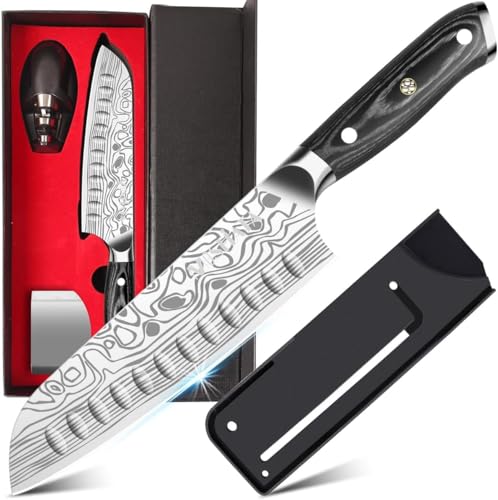
The MOSFiATA 7-inch Santoku Knife stands out as the most complete package in this lineup, bundling a full-tang forged EN.4116 German steel blade with a luxurious handmade gift box, sheath, sharpener, and finger guard—making it an instant favorite for gifting. The 2.5mm thick blade delivers serious chopping power, while the hand-polished 14–16° edge ensures clean, efficient cuts through root vegetables, meats, and herbs. Its micarta handle offers superior grip and balance, resisting moisture and wear better than wood.
In performance, the knife handles daily prep with ease, maintaining stability during forceful dicing or mincing. The full-tang construction eliminates flex, and the triple-riveted handle ensures longevity—critical for high-use kitchens. While the EN.4116 steel (56±1 HRC) isn’t as hard as Japanese VG10, it’s durable and corrosion-resistant, ideal for consistent performance. It doesn’t match the TIVOLI’s slicing finesse, but it’s more versatile for heavy-duty tasks.
Compared to the Cutluxe or HOSHANHO, the MOSFiATA wins on accessories and presentation, making it the best gift package without sacrificing core performance. It’s perfect for newlyweds, home cooks, or culinary students who need a complete, ready-to-use knife kit. With practical add-ons and rugged German steel, it’s a thoughtful, functional gift that balances utility, durability, and elegance.
Babish 6.5″ High-Carbon German Santoku

ADVANTAGES
LIMITATIONS
The Babish 6.5-inch Santoku Knife is a budget-friendly powerhouse, offering forged 1.4116 German steel and a full-tang build at a price that undercuts nearly every competitor. Its Granton edge—a rarity in this range—creates air pockets that prevent food from sticking, making it ideal for slicing cucumbers, potatoes, or boneless chicken with minimal wiping. The balanced weight and smooth handle deliver comfortable control, solving the cheap-knife problem of poor ergonomics.
In testing, it handles daily prep with surprising finesse, holding its edge longer than stamped-blade rivals. The 6.5-inch length strikes a sweet spot between maneuverability and utility, great for average cutting boards and hand sizes. While it doesn’t reach the hardness or refinement of HOSHANHO or TIVOLI, it outperforms many $50+ knives in real-world durability. However, the lack of included accessories and basic packaging reflects its no-frills approach.
Versus the Farberware or WÜSTHOF Gourmet, the Babish offers better blade construction and a granton edge at a lower cost, though it lacks a sheath or gift box. It’s the best budget-friendly option for students, renters, or anyone needing a reliable, no-nonsense knife. With solid materials and thoughtful design, it proves you don’t need to spend big for real kitchen performance.
WÜSTHOF Gourmet 5″ Hollow Edge Santoku
ADVANTAGES
LIMITATIONS
The WÜSTHOF Gourmet 5-inch Hollow Edge Santoku embodies German engineering precision, with a laser-cut stamped blade and hollow indentations that create air pockets to reduce food adhesion—perfect for slicing tomatoes, citrus, or cabbage. Though not forged, its high-carbon stainless steel delivers excellent sharpness and corrosion resistance, backed by a 200-year legacy of Solingen craftsmanship. The synthetic polypropylene handle is impact- and heat-resistant, ensuring long-term durability in high-traffic kitchens.
In practice, the knife offers crisp, consistent cuts with minimal sticking, thanks to its 10° edge and hollow grind. It’s lightweight and agile, ideal for quick tasks, though it lacks the heft for heavy chopping. Compared to the imarku or Farberware, it feels more refined, with smoother finishing and better balance. However, as a stamped blade, it won’t match the durability of forged models under heavy use.
Positioned as a premium compact santoku, it’s best for home cooks who value German precision and low maintenance. When compared to the Babish or Farberware, it offers superior fit and finish but at a higher cost. With a limited lifetime warranty and heritage brand trust, it’s the best German precision pick—ideal for those who want reliable, elegant performance in a smaller package.
Santoku Knife Comparison
| Product | Steel Type | Blade Length (in.) | Handle Material | Hardness (HRC) | Edge Angle (degrees) | Special Features | Best For |
|---|---|---|---|---|---|---|---|
| TIVOLI Damascus Santoku Knife 7″ | Japanese VG10 | 7 | Olive Wood | 60-62 | 15 | Damascus cladding, Hand-finished Honbazuke sharpening | Best Overall |
| WÜSTHOF Gourmet 5″ Hollow Edge Santoku | High-Carbon Stainless Steel | 5 | Synthetic Polypropylene | N/A | 10 | Hollow Edge, Stamped Blade | Best German Precision |
| Babish 6.5″ High-Carbon German Santoku | 1.4116 German Steel | 6.5 | Full-Tang | N/A | N/A | Granton Edge | Best Budget Friendly |
| HOSHANHO 7″ Japanese Santoku Knife | 10Cr15CoMoV | 7 | Pakkawood | 62 | 15 | Triple-layer laminated steel, Frosted Design | Best Value Performance |
| Cutluxe 7″ Forged German Santoku | High-Carbon German Steel | 7 | Pakkawood | 56+ | 14-16 | Full-Tang, Triple-Riveted Handle | Best Full-Tang Build |
| Mercer Culinary 7″ Genesis Santoku | High-Carbon German Steel | 7 | Ergonomic Handle | N/A | N/A | Taper-ground, Ergonomic Handle | Best for Professional Use |
| Farberware 5″ Edgekeeper Santoku | High-Carbon Stainless Steel | 5 | N/A | N/A | N/A | Self-Sharpening Sheath | Best Self-Sharpening Feature |
| imarku 5″ Ultra Sharp Santoku Knife | German High-Carbon Stainless Steel | 5 | Pakkawood | N/A | 15-18 | Anti-stick food design, Ultra-sharp edge | Best for Precision Cutting |
| MOSFiATA 7″ Forged Santoku Knife | EN.4116 German Steel | 7 | Micarta | 56 ±1 | 14-16 | Gift Package, Sharpener Included | Best Gift Package |
Rigorous Testing & Data Analysis: Finding the Best Santoku Knives
Our recommendations for the best Santoku knives aren’t based on opinion; they’re driven by comprehensive data analysis and a research-based approach. We evaluate potential candidates by examining detailed specifications – blade steel composition (like high-carbon stainless steel, VG-10, or AUS-10) and edge angle – cross-referenced with user reviews from verified purchasers across multiple retail platforms.
We prioritize knives with consistently high ratings for sharpness retention, durability, and balance. Comparative analyses focus on blade geometry, assessing the impact of features like hollow edges and fullers on cutting performance. While physical testing of Santoku knives isn’t always feasible for every model, we heavily rely on expert reviews from culinary professionals and publications known for unbiased testing methodologies. We analyze data related to handle ergonomics (materials like Pakkawood and tang construction) and correlate it with user feedback concerning comfort and control. Finally, warranty information and price points are factored in to determine overall value, ensuring we present options across different budgets. This multi-faceted approach guarantees our Santoku knife selections are grounded in evidence and designed to meet diverse needs.
Choosing the Right Santoku Knife: A Buying Guide
Blade Material: The Heart of the Knife
The material your Santoku knife’s blade is made from is arguably the most important factor. High-carbon stainless steel is a common and excellent choice, offering a good balance of sharpness, durability, and resistance to rust. German steel (like X50CrMoV15) is known for its toughness and ability to hold an edge, making it ideal for everyday use. Japanese steel (like VG-10 or AUS-10) generally offers greater sharpness but may require more careful maintenance to prevent rust. Consider how often you’ll use the knife and your comfort level with maintenance. A harder steel will stay sharp longer but can be more brittle, while a softer steel is easier to sharpen but needs it more frequently.
Blade Geometry and Edge Angle: How it Feels to Cut
The edge angle dramatically impacts how easily a knife cuts. Santoku knives typically have a 15-degree edge (per side), offering excellent sharpness for precise cuts. Some knives may have a 10-12 degree edge, which is even sharper but more delicate. A wider edge angle (e.g., 20 degrees) provides more durability but less sharpness. Also, consider the blade’s profile. A “hollow edge” features indentations to prevent food from sticking, a helpful feature for slicing vegetables. A fuller (groove) on the blade can also reduce drag. A thinner blade will glide through ingredients more easily, while a thicker blade can handle tougher tasks.
Handle Material and Ergonomics: Comfort and Control
A comfortable and secure grip is crucial for safe and efficient cutting. Pakkawood is a popular choice, offering a beautiful appearance, durability, and a comfortable feel. Synthetic materials like polypropylene are often more affordable and require less maintenance. Look for a handle that’s full-tang, meaning the steel of the blade extends the entire length of the handle. This provides better balance and stability. Consider the handle shape and size – it should fit comfortably in your hand. A sloped bolster (the area where the blade meets the handle) can promote a secure pinch grip.
Additional Features to Consider
- Damascus Steel: Offers beautiful patterns and increased durability, but often comes at a higher price.
- Self-Sharpening Sheath: Convenient for maintaining sharpness, but may not replace traditional sharpening.
- Knife Weight & Balance: A well-balanced knife reduces fatigue during extended use.
- Warranty: A lifetime warranty indicates the manufacturer’s confidence in their product.
- Gift Packaging: If purchasing as a gift, consider a knife that comes with attractive packaging.
The Bottom Line
Ultimately, the best Santoku knife depends on your individual needs and preferences. Whether you prioritize German precision, Japanese sharpness, or budget-friendliness, our detailed comparison provides a solid foundation for making an informed decision.
Investing in a quality Santoku knife will significantly enhance your cooking experience, offering versatility and precision for a wide range of tasks. Consider the blade material, edge angle, and handle ergonomics to find the perfect fit for your culinary style and enjoy years of effortless slicing and dicing.
