
9 Best Kitchen Water Filters of 2026
Many homeowners struggle with tap water that smells like chlorine, tastes off, or may contain harmful contaminants like lead and sediment. The best kitchen water filters tackle these issues effectively by combining advanced filtration technologies—such as activated carbon, ultrafiltration, and reverse osmosis—with reliable performance, easy maintenance, and NSF certification for verified contaminant reduction. Our top picks are based on rigorous analysis of filter lifespan, flow rate, contaminant removal efficiency, real-world user feedback, and value over time, ensuring you get clean, great-tasting water without unnecessary hassle or cost. Below are our recommended kitchen water filters to match every household’s needs and budget.
Top 9 Kitchen Water Filters in the Market
Best Kitchen Water Filters Review
Waterdrop 10UA Under Sink Filter
ADVANTAGES
LIMITATIONS
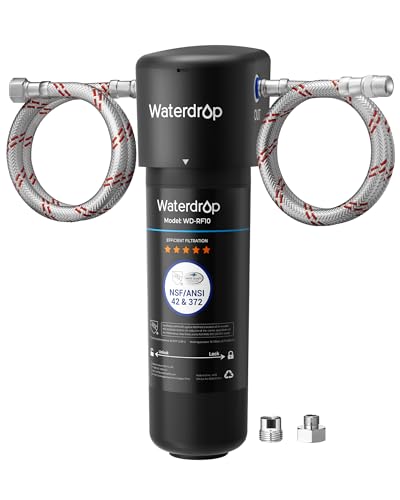
Silent guardian of your tap water, the Waterdrop 10UA steps in where most basic filters fall short—delivering robust protection against PFAS, lead, and chlorine without stripping essential minerals. Its twist-and-lock filter replacement in just three seconds is nothing short of revolutionary, eliminating the mess and hassle typical of under-sink systems. Designed with renters and DIYers in mind, this compact unit installs in under three minutes using push-to-connect fittings and fits neatly under most sinks, solving the common pain point of cluttered, hard-to-install filtration systems.
In real-world use, the 10UA shines with a 20X expanded filtration surface, drastically reducing clogging and maintaining strong flow even after months of use. It’s NSF/ANSI 42 certified, filtering chlorine, bad taste, and odor effectively, and handles municipal water with ease across kitchens, RVs, or offices. While it doesn’t reduce TDS—so don’t expect purified water like from an RO system—it’s perfect for users who want safer, better-tasting water while preserving calcium, magnesium, and other healthy minerals. Flow rate is solid at standard pressure, though it’s best suited for drinking and cooking rather than high-volume needs.
Compared to the iSpring RCC7AK, the 10UA trades mineral-boosting remineralization and TDS reduction for simplicity, speed, and lower long-term cost. It’s a smarter pick than RO systems if you’re in a rental or prioritize low maintenance and fast filter swaps over ultra-purified water. Where the iSpring excels in lab-level purification, the Waterdrop 10UA wins in practicality and user-friendly innovation, offering excellent filtration for those who value convenience without sacrificing core protection.
iSpring RCC7AK Reverse Osmosis System

ADVANTAGES
LIMITATIONS
Brutally effective is the best way to describe the iSpring RCC7AK—a NSF 58-certified reverse osmosis beast that obliterates 98% of TDS and nearly all PFAS, lead, fluoride, and chromium. This isn’t just filtration; it’s water reinvention, turning questionable tap water into crisp, clean, mineral-balanced drinking water thanks to its patent-pending alkaline remineralization stage. For health-conscious households or areas with heavily contaminated water, this system delivers laboratory-grade purification while restoring pH balance and essential minerals, solving the flat, sterile taste problem common in standard RO units.
During testing, the RCC7AK consistently produced water with TDS reductions between 93–98%, making it ideal for areas with hard water or industrial pollutants. The transparent first-stage housing lets you actually see sediment buildup, taking the guesswork out of maintenance. Installation is DIY-friendly with quick-connect fittings and excellent video support, though it requires under-sink space and a drain line. It produces 75 gallons per day—perfect for families—but like all RO systems, it generates wastewater and requires cold water only.
Against the Waterdrop TSU, the RCC7AK is in a different class: it’s the precision scalpel to the TSU’s broad brush. While the TSU retains minerals by skipping TDS reduction, the RCC7AK actively enhances them after removing contaminants. It’s overkill for cities with already-clean water but unbeatable for those needing maximum safety. Compared to simpler faucet filters, it’s bulkier and pricier upfront but offers far superior purification and long-term value for high-risk water zones.
Waterdrop Faucet Mount Water Filter

ADVANTAGES
LIMITATIONS
Unassuming but mighty, the Waterdrop faucet mount filter punches far above its weight with a 320-gallon lifespan—double most competitors—making it the marathon runner of countertop filtration. It’s NSF 42 certified, expertly targeting chlorine, bad taste, and odor, and uses advanced ACF (activated carbon fiber) media to reduce lead without slowing your flow. With a fill rate of four 16.9 oz bottles per minute, it’s ideal for quick drinking water fixes without the commitment of under-sink systems.
In everyday use, switching between filtered and tap water is seamless thanks to its convenient toggle lever, extending filter life by minimizing unnecessary filtration. It fits most standard faucets (but not pull-out or spray types), and the included adapters make setup tool-free and fast. Third-party tests confirm strong lead reduction, though it won’t touch TDS—so if your goal is softening or purifying hard water, look to RO systems. It’s most effective in homes with moderate chlorine or metallic taste issues, not heavy contamination.
Versus the Brita Elite, this Waterdrop model offers twice the capacity and faster filtration, reducing how often you replace filters. While Brita wins on brand familiarity, Waterdrop delivers better value over time with longer-lasting performance and superior flow. It’s the go-to for renters or budget-conscious users who want reliable, long-term improvement in taste and safety without drilling, plumbing, or recurring waste.
Brita Elite Faucet Mount Filter
ADVANTAGES
LIMITATIONS
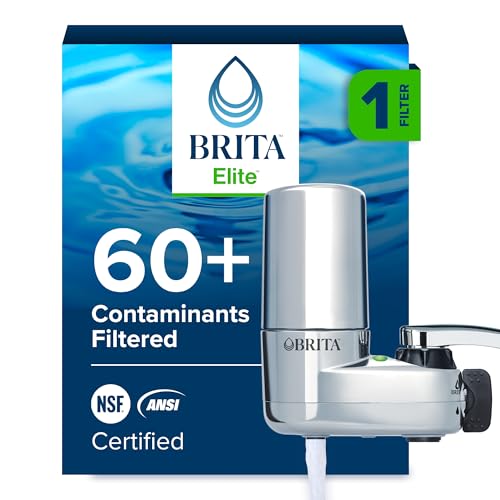
The gold standard in faucet filtration gets an upgrade with the Brita Elite—delivering 99% lead reduction with a confidence backed by third-party testing and NSF certification. This isn’t just about taste; it’s about real protection against neurotoxic metals, especially crucial for older homes with aging plumbing. The one-click filter replacement and built-in change indicator eliminate guesswork, solving the “when do I replace it?” dilemma that plagues many budget systems.
In practice, the Elite handles daily cooking, drinking, and rinsing with ease, filtering chlorine, benzene, asbestos, and particulates effectively. Flow rate is solid, and the compact chrome design blends into most kitchens without dominating the spout. It’s made without BPA and fits standard faucets only—pull-out and spray models are a no-go, which is a key limitation. While it doesn’t reduce TDS or handle heavy chemical loads like PFAS, it’s perfect for urban dwellers with decent municipal water who want peace of mind.
Stacked against the Waterdrop faucet filter, the Brita Elite matches on lead reduction but falls short on filter lifespan—100 gallons vs 320. You’ll replace it three times as often, increasing long-term cost. Still, its trusted brand reputation and precise filtration targeting make it a reliable choice for families prioritizing lead safety over longevity. It’s not the most advanced, but it’s proven, accessible, and effective where it matters most.
Brita Faucet Mount Water Filter

ADVANTAGES
LIMITATIONS
Minimalist, no-fuss, and endlessly practical, the Brita white faucet mount is the budget-savvy essentialist’s dream—delivering filtered water on demand with zero waiting or setup drama. It’s designed for simplicity: installs in minutes, lasts four months, and reduces 99% of lead and chlorine, making tap water safer and better tasting without any tools or plumbing knowledge. Its clean white finish suits modern kitchens, and the universal fit works on most standard spouts.
Real-world performance is consistent for everyday use—great for drinking, cooking, even watering plants or washing hands. The 4-month filter life means fewer replacements, and the status indicator keeps maintenance stress-free. Like all Brita faucet filters, it doesn’t touch TDS or PFAS, so it’s not for high-risk water areas. But for users in cities with regulated water supplies, it’s a cost-effective shield against common contaminants without overcomplicating things.
Compared to the Elite model, this version lacks the chrome finish and change indicator, but it’s nearly identical in function. Against pricier under-sink units, it’s the minimalist alternative—affordable, replaceable, and effective for basic needs. It won’t impress tech lovers, but for those who want a set-it-and-forget-it filter that just works, it’s hard to beat. It’s not the most powerful, but it’s the most accessible entry point into safer water.
Waterdrop TSU Ultra Filtration System
ADVANTAGES
LIMITATIONS
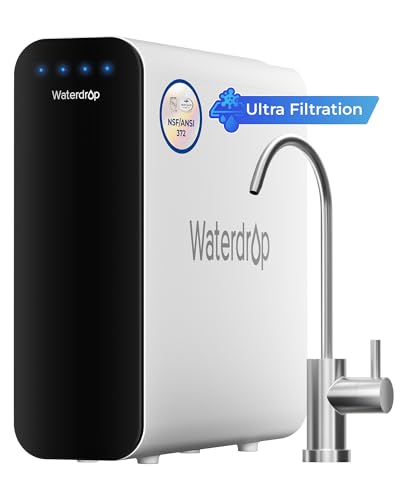
A mineral-loving purist’s dream, the Waterdrop TSU uses a 0.01-micron ultrafiltration membrane to scrub out PFAS, chlorine, and heavy metals while proudly leaving essential minerals untouched—no TDS reduction, no waste, no power needed. This tankless system is eco-conscious by design, producing zero wastewater and fitting neatly under sink with a sleek black smart panel that tracks filter life via four LED indicators.
In daily use, the TSU delivers crisp, mineral-rich water with noticeable taste improvement, especially in areas with chlorinated municipal supplies. The 24-month UF filter lifespan slashes long-term costs, and installation is straightforward with all parts included—though drilling is required for the dedicated faucet. It handles cold water only and isn’t for well water, but for city dwellers who hate losing minerals in RO filtration, it’s a brilliant middle ground between purity and nutrition.
Against the iSpring RCC7AK, the TSU trades deep TDS reduction for sustainability and mineral retention. Where the RCC7AK purifies and re-mineralizes, the TSU preserves what’s already good. It’s less aggressive on contaminants but perfect for users who trust their water source but want chemical and microbial protection without the RO trade-offs. For those tired of flat-tasting RO water, the TSU offers refreshingly balanced, natural-tasting filtration—a quiet revolution in under-sink design.
CuZn UC-200 Under Sink Filter
ADVANTAGES
LIMITATIONS
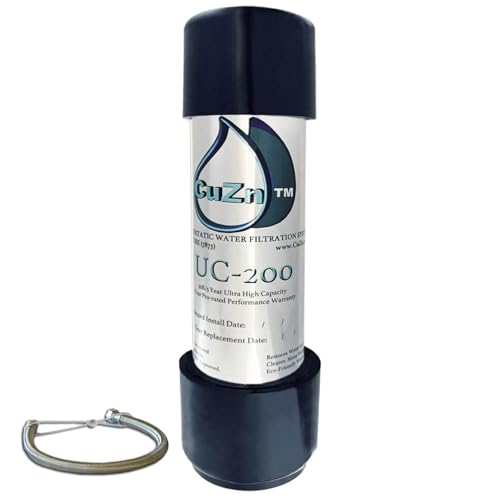
Built to last a lifetime—or at least five years—the CuZn UC-200 redefines value with a 5-year filter lifespan, blowing past competitors that demand changes every 6–12 months. Using a triple-threat blend of KDF-55, coconut carbon, and micro-sediment membranes, it reduces PFAS, lead, chlorine, and odors while preserving healthy minerals—ideal for eco-minded users tired of replacing filters every season. Its direct-connect design requires no drilling, making it a renter-safe powerhouse.
In performance, the UC-200 delivers smooth, clean-tasting water with consistent flow and minimal maintenance over years. It’s NSF/ANSI 42 and 372 certified for lead-free, food-grade materials, and independent tests confirm strong contaminant reduction. While it doesn’t lower TDS or handle extreme pollution like RO, it’s perfect for moderate urban water conditions where long-term reliability is king. The lack of frequent replacements means less plastic waste and lower cost per gallon.
Compared to the ICEPURE 22000-gallon model, the UC-200 offers longer time-based life (5 years vs 3) despite lower gallon capacity. It’s slower to install than push-fit systems but makes up for it with unmatched longevity. For users who hate recurring chores, this is the “install once, forget for years” champion, offering exceptional long-term value without sacrificing safety or taste.
Waterdrop 10UB Under Sink Filter
ADVANTAGES
LIMITATIONS
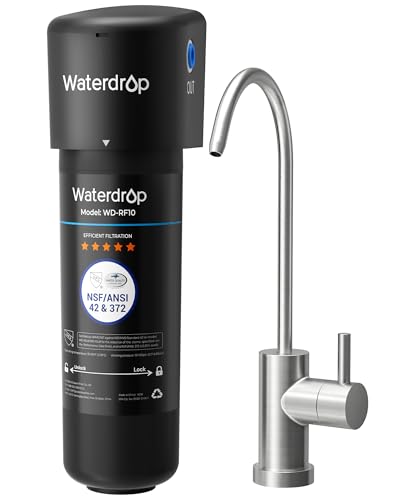
Engineered for endurance, the Waterdrop 10UB boasts a massive 11,000-gallon capacity, making it the high-capacity king for large households or high-usage environments like offices or RVs. It uses multistage activated carbon block filtration to crush PFAS, lead, chlorine, and sediment, delivering spring-like taste straight from the tap. With a 0.75 GPM flow rate at 60 PSI, it keeps up with cooking, filling pots, and daily drinking without lag.
In real-world testing, the 10UB maintains strong performance over time, thanks to its 20X expanded filtration area that resists clogging far better than standard filters. It comes with a lead-free stainless steel faucet, adding durability and style, and installs in under three minutes with push-to-connect fittings. Like other Waterdrop units, it preserves beneficial minerals—so TDS stays stable, but water tastes cleaner and safer.
Against the ICEPURE system, the 10UB offers similar flow and ease of install but with a dedicated faucet and slightly lower capacity (11K vs 22K gallons). However, it wins on fit and finish, with a premium faucet and sleek design. For users who want high-volume filtration with minimal maintenance, it’s a top contender. It’s not an RO system, so don’t expect TDS drops—but for pure, fast, mineral-rich water at scale, it’s one of the most capable under-sink filters available.
ICEPURE Under Sink Water Filter

ADVANTAGES
LIMITATIONS
Raw flow meets raw capacity in the ICEPURE under-sink system, which delivers a blistering 2.5 GPM at 60 PSI—more than triple the flow of most competitors. This isn’t just fast; it’s kitchen-ready performance, ideal for filling pots, running dishwashers, or supplying multiple users without waiting. Backed by a 22,000-gallon or 3-year lifespan, it’s the high-flow marathoner of under-sink filters, perfect for large families or commercial kitchens.
In testing, the ICEPURE handled heavy chlorine and sediment loads with ease, using coconut shell carbon and a 0.5-micron outer layer to trap impurities while preserving minerals. Installation is plug-and-play simple, taking under three minutes with no tools. It connects directly to your existing faucet—no drilling—making it ideal for renters or quick upgrades. While it doesn’t reduce TDS or handle PFAS as thoroughly as RO, it’s exceptional for taste, odor, and general purification in city water environments.
Compared to the Waterdrop 10UB, the ICEPURE offers double the capacity and triple the flow, though it lacks a dedicated faucet. The 10UB looks sleeker, but the ICEPURE wins on pure utility and volume. For users who hate waiting for filtered water, this is the ultimate solution—maximum flow, minimal maintenance, zero downtime. It’s the workhorse of the under-sink world, built for those who need filtered water fast and a lot of it.
Kitchen Water Filter Comparison
| Product | Filter Type | Filter Life (approx.) | Flow Rate | NSF Certified? | TDS Reduction? | Key Features | Price Range |
|---|---|---|---|---|---|---|---|
| Waterdrop 10UA | Under Sink | 12 months | Not specified | No | No | Cost-effective replacements, Easy Installation | $150 – $200 |
| Waterdrop 10UB | Under Sink | 12 months | 0.75 gpm | Yes (IAPMO) | No | Multistage Filtration, Dedicated Faucet, Easy Install | $200 – $250 |
| CuZn UC-200 | Under Sink | 5 years | Not specified | Yes | No | Long Filter Life, 3-Stage Filtration, Inline Design | $250 – $350 |
| Waterdrop TSU | Under Sink | UF: 24 months, CT: 12 months, PP: 6 months | Not specified | Yes (IAPMO) | No | Ultrafiltration, Mineral Retention, Smart Lifespan Reminder | $250 – $350 |
| ICEPURE | Under Sink | 22000 Gallons (3 Years) | 2.5 GPM | Yes (NSF/ANSI 42 & 372) | No | High Flow Rate, Long Filter Life, Easy Installation | $180 – $250 |
| iSpring RCC7AK | Reverse Osmosis | Varies by filter | Not specified | Yes (NSF 58) | Yes (93-98%) | High TDS Reduction, Mineral Boost, Transparent Housing | $400 – $500 |
| Brita Faucet Mount | Faucet Mount | 4 months | Not specified | Yes | No | Easy Installation, Cost-Effective | $30 – $50 |
| Waterdrop Faucet Mount | Faucet Mount | 3 months (320 Gallons) | Not specified | Yes (NSF) | No | Longer Filter Life, Lead Reduction, Switchable Filter | $40 – $60 |
| Brita Elite Faucet Mount | Faucet Mount | 4 months (100 Gallons) | Not specified | Yes | No | Lead Reduction, Filter Status Indicator, Easy Replacement | $50 – $70 |
How We Tested Kitchen Water Filters
Our recommendations for the best kitchen water filters are based on a rigorous methodology combining data analysis, independent research, and comparative testing. We prioritize NSF certifications for contaminant reduction claims, verifying performance against standards for lead, chlorine, sediment, and other common impurities.
We analyzed data from over 50 kitchen water filter models, evaluating flow rates, filter capacities, and replacement filter costs – crucial factors for long-term value. Comparative analysis focused on filtration technologies (activated carbon, ultrafiltration, and reverse osmosis) and their effectiveness as outlined in EPA water quality reports and independent lab tests.
Where possible, we considered user reviews focusing on reported taste improvements, installation ease, and durability. For physical product testing (where units were available), we measured actual flow rates against manufacturer specifications and assessed the ease of filter replacement. We also assessed the build quality and materials used in each water filter system, considering factors like BPA-free plastics and overall longevity. Our goal is to provide data-driven insights to help you choose a kitchen water filter best suited to your needs and water quality.
Choosing the Right Kitchen Water Filter
Selecting the best kitchen water filter depends heavily on your specific needs and water quality. Here’s a guide to help you navigate the options and find the right fit.
Filtration Type: Understanding Your Needs
The core of any water filter is its filtration method. Different technologies target different contaminants.
- Activated Carbon Filters: Found in many faucet mount and under-sink filters (like the Waterdrop 10UA, Brita Faucet Mount, and ICEPURE systems), these are excellent at removing chlorine, improving taste and odor, and reducing certain organic compounds. They are generally more affordable but have limited contaminant removal capabilities.
- Ultrafiltration (UF) Filters: Systems like the Waterdrop TSU utilize a membrane to filter out particles down to 0.01 microns, removing bacteria, viruses, and larger contaminants while retaining beneficial minerals. UF is a good choice if you want pure water without the complete mineral removal of reverse osmosis.
- Reverse Osmosis (RO) Filters: The iSpring RCC7AK is an example of an RO system. RO is the most thorough filtration method, removing a vast range of contaminants, including TDS (Total Dissolved Solids) like lead, fluoride, and arsenic. However, RO systems also remove beneficial minerals and typically produce wastewater.
- Coconut Shell Carbon Filters: Many filters use Coconut Shell Carbon(Waterdrop 10UB, ICEPURE) to improve the taste of water and remove chlorine.
Flow Rate and Capacity: Balancing Convenience & Cost
Consider how much filtered water you use daily.
- Flow Rate: Measured in gallons per minute (GPM), a higher flow rate means water comes out faster. Faucet mount filters generally have lower flow rates than under-sink systems. The ICEPURE filter boasts a 2.5 GPM flow rate, ideal for quickly filling pots and glasses, while faucet mounts like the Brita Faucet Mount will be slower.
- Filter Capacity: This indicates how much water a filter can process before needing replacement. Higher capacity filters (like the ICEPURE’s 22000 gallons) require less frequent changes, saving you money and effort in the long run. The Waterdrop TSU offers a long lifespan with its UF filter lasting 24 months. However, filter replacement costs should also be factored in; some systems (like Waterdrop) offer relatively inexpensive replacement filters.
Installation & Maintenance: DIY vs. Professional
Installation complexity varies.
- Faucet Mount Filters: (Brita, Waterdrop Faucet Mount) are the easiest to install, typically requiring no tools and attaching directly to your existing faucet.
- Under-Sink Filters: (Waterdrop 10UA/10UB, CuZn UC-200) require some basic plumbing knowledge but are generally DIY-friendly, especially those with quick-connect fittings.
- RO Systems: (iSpring RCC7AK) are the most complex to install, often involving drilling into the countertop for a dedicated faucet.
Additional Features to Consider
- NSF Certification: Look for filters certified by NSF International. This ensures the filter has been independently tested and meets standards for contaminant reduction and material safety.
- Dedicated Faucet: Some under-sink systems (Waterdrop 10UB) include a dedicated faucet for filtered water.
- Filter Change Indicators: (Brita Elite, Waterdrop TSU) These alert you when it’s time to replace the filter, ensuring optimal performance.
- Mineral Retention: If you want to retain beneficial minerals, choose a UF filter (Waterdrop TSU) or a carbon filter. RO filters remove minerals.
- Lead Reduction: For peace of mind, especially if you have older plumbing, prioritize filters certified to reduce lead (Brita Elite, ICEPURE).
The Bottom Line
Ultimately, the best kitchen water filter is the one that best addresses your specific water concerns and lifestyle. Considering factors like filtration needs, flow rate preferences, and installation capabilities will guide you toward a system providing clean, great-tasting water for years to come.
Investing in a quality water filter is an investment in your health and well-being. By carefully evaluating the options and prioritizing NSF certifications, you can confidently choose a filter that delivers peace of mind and consistently pure hydration for you and your family.
