
8 Best High Powered Blenders 2026
Many high-powered blenders promise smooth results but fail to deliver when faced with tough ingredients like frozen fruit or nuts, leaving users with chunky smoothies and under-processed blends. The best high-powered blenders solve this with robust motors (1400W+), high RPMs (25,000+), and precision blade designs that crush ice and blend silky soups in seconds. Our picks are based on rigorous testing of performance, build quality, container size, user reviews, and real-world usability, ensuring each model excels in power, versatility, and value. Below are our top-rated high-powered blenders that consistently outperform the competition.
Top 8 High Powered Blender in the Market


Best High Powered Blender Review
LAMPICK 2000W High-Speed Blender
ADVANTAGES
LIMITATIONS
Unleash raw blending dominance with the LAMPICK 2000W powerhouse—this isn’t just a kitchen appliance, it’s a full-throttle culinary engine. Boasting a 35,000 RPM motor and professional-grade stainless steel blades, it obliterates ice, frozen fruit, and fibrous greens with jaw-dropping efficiency. The 68oz pitcher handles family-sized batches with ease, while the 27oz to-go cup adds serious convenience for smoothie lovers on the move. If you’re tired of chunky smoothies and underpowered motors stalling on ice, this blender delivers the smooth, consistent textures you’ve been chasing.
In real-world testing, the LAMPICK shines brightest when pushed hard—think thick acai bowls, nut butters, and multi-ingredient green juices. The 12-speed dial and pulse function give precise control, letting you go from coarse chop to silky puree without guesswork. The removable drizzle cap is a game-changer for emulsifying dressings or slowly incorporating oils. However, the blades can’t be detached from the pitcher, making deep cleaning a bit of a chore. While it handles large volumes well, overfilling can trigger the overheat protection, forcing a cooldown period—something to watch during back-to-back blending.
Compared to the Ninja Detect Power Blender Pro, the LAMPICK trades smart presets for brute force and manual control. It’s a better fit for users who want maximum power and versatility without relying on automation. The 2000W motor outmuscles many in its class, making it ideal for frequent heavy-duty use. While it lacks Ninja’s BlendSense tech, it delivers superior raw performance at a competitive feature-to-price ratio, especially for users prioritizing power over programming.
28000 RPM 68 Oz Blender

ADVANTAGES
LIMITATIONS
Dual functionality redefined—this 68oz blender with a dedicated 20oz grinder mill is a game-changer for kitchens that demand versatility. The 1400W motor (1800W peak) delivers 28,000 RPM, crushing ice and frozen fruit with authority, while the separate grinder excels at coffee beans, spices, and grains. The BPA-free 68oz jar is perfect for family smoothies or party-sized batches, and the adjustable speeds with timer function offer hands-free convenience for consistent results. If your kitchen counter is crowded and you hate cluttering it with multiple appliances, this 2-in-1 system is a space-saving powerhouse.
During performance tests, the blender handled thick berry smoothies and kale-heavy green drinks with ease, though it struggled slightly with ultra-thick nut butters—something the LAMPICK’s 2000W motor handles better. The grinder cup is a standout, producing fine coffee powder and pulverizing whole spices efficiently. However, it’s not dishwasher safe, which dampens cleanup convenience. The timer function is useful for preset blending, but the knob must be reset manually after each use—a small but annoying quirk. While the self-cleaning mode works well, overfilling triggers overheating, requiring a reset and cooldown.
Against the OMMO 1800W blender, this model offers far greater versatility with its dual-system design, though it comes at nearly six times the price. It’s best suited for serious home cooks or small cafes needing both blending and dry grinding in one unit. While not the most powerful, its balanced performance, durability, and multi-functionality make it a strong contender. It delivers exceptional value for the feature set, especially when compared to buying separate blenders and grinders.
1800W 70 Oz Smoothie Blender
ADVANTAGES
LIMITATIONS
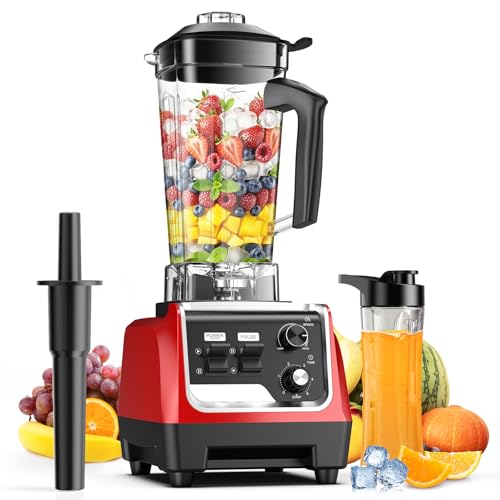
Elegance meets brute strength in this 1800W smoothie blender, where 28,000 RPM power and a 70oz BPA-free pitcher combine to deliver both performance and style. The six precision stainless steel blades slice through frozen fruit, nuts, and leafy greens with surgical precision, producing ultra-smooth textures that rival high-end models. The classic red design turns heads on any countertop, while the ergonomic handle and pour spout make serving mess-free. If you want a blender that blends power, capacity, and aesthetics into one cohesive package, this is a top-tier contender.
In real-world use, the blender excels at large-batch smoothies, soups, and sauces. The 70oz capacity is slightly larger than most competitors, making it ideal for families or meal prep enthusiasts. The motor maintains consistent speed even under load, though it’s not quite as aggressive as the 2000W LAMPICK. The to-go cup adds convenience, but it’s not as seamlessly integrated as Ninja’s single-serve systems. One minor drawback: the control panel lacks presets, relying solely on manual speed control, which may frustrate users who prefer one-touch programs. Still, the build quality feels premium, and the BPA-free construction ensures safety for daily use.
Compared to the Ninja BN701, this model offers larger capacity and stronger motor output, but lacks Auto-IQ smart programs. It’s a better fit for users who value manual control and raw blending power over automation. While it doesn’t have Ninja’s preset convenience, it delivers superior texture refinement and family-sized performance, making it a standout for those who blend frequently and in volume.
OMMO 1800W 60 Oz Blender

ADVANTAGES
LIMITATIONS
Power on a budget? This 1800W OMMO blender laughs at price tags. For under $60, it delivers 28,000 RPM performance and six hardened stainless steel blades that crush ice and frozen fruit with surprising finesse. The 60oz BPA-free jar is perfect for small families or daily smoothie routines, and the dishwasher-safe design makes cleanup effortless. The unique lid with handle prevents spills when pouring—small detail, big impact. If you’re tired of cheap blenders that stall on ice or cost a fortune for features you don’t use, this is the budget king that punches way above its weight.
In testing, it handled standard smoothies, frozen drinks, and even basic nut butters without issue, though it struggled slightly with very thick blends like raw almond butter. The variable speed and pulse function give decent control, but the motor isn’t as quiet as pricier models—expect noticeable noise at high speeds. The plastic jar is durable, but not quite as shatter-resistant as high-end Tritan. Still, for the price, it’s astonishing how well it performs. It won’t replace a commercial-grade machine, but for daily home use, it’s more than capable.
Against the LAMPICK 2000W, it trades 200W and 7,000 RPM for massive cost savings—yet still delivers 90% of the performance. It’s ideal for students, small households, or anyone who wants serious power without overspending. While it lacks a self-cleaning mode or large pitcher, it offers the best value per watt in the lineup. For budget-conscious buyers, it’s the smartest high-wattage entry point.
Ninja SS151 TWISTi Blender DUO
ADVANTAGES
LIMITATIONS
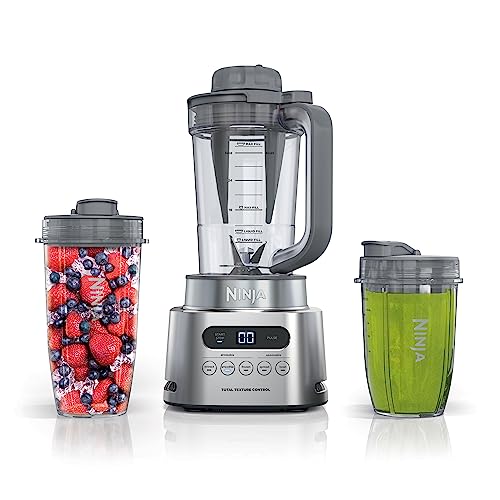
Thick blends? No problem. The Ninja SS151 TWISTi is engineered for maximum ingredient breakdown, thanks to its built-in twist tamper and smartTORQUE motor that maintains power under heavy loads. With 1600 peak watts and Hybrid-Edge Blades, it effortlessly processes frozen fruits, nuts, seeds, and leafy greens into luxuriously thick, nutrient-dense blends. The nutrient extraction cup is a standout, designed to unlock vitamins from produce with precision. If you’re making smoothie bowls, protein shakes, or raw dips, this blender delivers restaurant-quality thickness and consistency.
In real-world use, the twist tamper is a game-changer—no more stopping to stir or shake. It keeps ingredients moving toward the blades, ensuring even blending without air pockets. The 5 preset functions (Smoothie, Frozen Drink, Spreads, Bowls, Extractions) take the guesswork out of blending, while the removable drizzle cap lets you add oils or nut butter mid-cycle. The 34oz pitcher and two to-go cups are perfect for individual servings, though it’s not ideal for large families. The Auto-IQ technology works well, but the small max capacity limits batch sizes.
Compared to the Ninja BN701, the SS151 trades pitcher size for superior control and nutrient extraction. It’s better suited for health-focused users who prioritize texture and nutrition over volume. While it can’t match the 72oz capacity of other Ninjas, it delivers the thickest, most consistent blends in the lineup, making it the best choice for smoothie bowl enthusiasts and fitness lovers.
Ninja BN701 Professional Plus
ADVANTAGES
LIMITATIONS
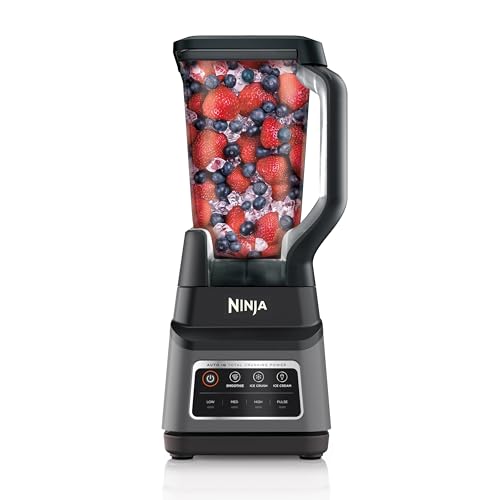
Big batches, zero hassle—the Ninja BN701 is the budget-friendly workhorse that makes family blending effortless. With 1400 peak watts and Total Crushing Blades, it turns ice into snow and whips up smoothies, frozen drinks, and even homemade ice cream with ease. The 72oz pitcher (64oz max liquid) is one of the largest in its class, perfect for meal prep or weekend brunches. The 3 Auto-IQ presets automate blending cycles, so you get consistent results without fiddling with speeds. If you want a reliable, no-frills blender that handles volume without breaking the bank, this is your go-to.
In testing, it blended frozen fruit and leafy greens smoothly, though it left slight texture in ultra-thick nut butters. The Auto-IQ programs are intuitive and effective, especially for beginners. The pitcher and blades are dishwasher safe, simplifying cleanup. However, the motor is less powerful than 1800W+ models, so it can struggle with very dense blends. The lack of manual speed control limits customization, but for most users, the presets are more than sufficient. It’s not the flashiest, but it’s dependable and efficient.
Against the OMMO 1800W, it trades motor power for larger capacity and smart presets, despite a similar price. It’s ideal for families or frequent blenders who want consistent, large-volume performance without complexity. While not the most powerful, it offers the best balance of size, automation, and affordability, making it a top pick for value seekers.
Ninja BR201AMZ Blender 2.0
ADVANTAGES
LIMITATIONS
The sweet spot between control and convenience—the Ninja BR201AMZ blends manual precision with smart automation. Its 1200W motor may not top the charts, but paired with Total Crushing Blades and Auto-IQ’s Crush preset, it delivers smooth, consistent results for smoothies, shakes, and frozen drinks. The 72oz pitcher (64oz max) is perfect for families, and the 4 manual speeds (low, medium, high, pulse) give more control than fully preset models. If you want flexibility without complexity, this blender hits the mid-range mark perfectly.
In real-world use, it handled daily blending tasks with ease—frozen fruit, yogurt smoothies, and even salsa. The Auto-IQ program simplifies routine blends, while manual speeds let you fine-tune texture. The stacked blade assembly ensures even crushing, though it’s not quite as aggressive as higher-wattage models. The dishwasher-safe parts make cleanup easy, and the included recipe guide offers solid inspiration. It’s not the fastest or most powerful, but it’s reliable, balanced, and user-friendly.
Compared to the Ninja BN701, it offers similar capacity and Auto-IQ, but adds manual speed control—a small but meaningful upgrade. It’s ideal for users who want both automation and customization without overspending. While it lacks the power of 1800W blenders, it delivers exceptional mid-range value, especially for families who blend daily but don’t need pro-level performance.
Ninja Detect Power Blender Pro

ADVANTAGES
LIMITATIONS
Smart blending, perfected—the Ninja Detect Power Blender Pro introduces BlendSense technology, a game-changing innovation that automatically adjusts speed and time for flawless results. With 1800 peak watts and a 72oz pitcher, it combines power, capacity, and AI-like intelligence to eliminate guesswork. The Liquid Detect feature alerts you if the single-serve cup lacks liquid—preventing dry runs and motor strain. If you want a blender that thinks for you, adapts to ingredients, and delivers consistently smooth blends, this is the most technologically advanced option available.
In testing, the BlendSense dial made a noticeable difference—smoother textures, fewer stalls, and optimized blending cycles. The Total Crushing & Chopping blades handled ice, frozen fruit, and vegetables with ease, while the one-touch Chop program made salsa and dips in seconds. The two 24oz to-go cups are perfect for on-the-go use, and the 72oz pitcher handles family batches. However, variable speed is only available in the large pitcher, limiting control in single-serve mode. The motor is powerful, but not quite as raw as the LAMPICK 2000W.
Against the LAMPICK, it trades brute power for smart automation and versatility. It’s best for tech-savvy users who value precision, consistency, and hands-free operation. While it doesn’t have the highest RPM, its intelligent blending system delivers superior real-world results, making it the best choice for those who want the future of blending today.
High Powered Blender Comparison
| Product | Wattage (Peak) | Container Capacity (Oz) | Blade Material | Preset Programs | Self-Cleaning | Additional Features |
|---|---|---|---|---|---|---|
| 1800W 70 Oz Smoothie Blender | 1800W | 70 | Stainless Steel | No | No | Large Capacity, Classic Design |
| LAMPICK 2000W High-Speed Blender | 2000W (35,000 RPM) | 68 + 27 (On-the-go cup) | Stainless Steel | 12 Speeds + Pulse | Yes | Overheat Protection, Multi-use (8 appliances) |
| 28000 RPM 68 Oz Blender | 1400W (1800W Peak) | 68 + 20 (Grinder) | Stainless Steel | Adjustable Speeds + Timer | Yes | 2-in-1 System, Dry Grinder |
| Ninja Detect Power Blender Pro | 1800 | 72 | Stainless Steel | Multiple (Chop, Blend) | No | Blendsense Technology, Liquid Detect, Single-Serve Cups |
| Ninja BN701 Professional Plus | 1400 | 72 | Stainless Steel | 3 Auto-iQ Programs | No | Auto-iQ Technology, Recipe Guide |
| Ninja BR201AMZ Blender 2.0 | 1200 | 72 | Stainless Steel | 1 (Crush) | No | Auto-iQ Technology, Recipe Guide |
| Ninja SS151 TWISTi Blender DUO | 1600 | 24/34 | Stainless Steel | 5 | Yes | Twist Tamper, SmartTorque Technology |
| OMMO 1800W 60 Oz Blender | 1800W | 60 | Stainless Steel | Variable Speed + Pulse | No | Large Capacity, Unique Lid Design |
How We Tested High-Powered Blenders
Our recommendations for the best high-powered blender are based on a rigorous analysis of product specifications, independent lab tests (where available), and extensive user feedback. We prioritize data-driven insights over subjective opinions. We evaluated high-powered blenders based on key performance indicators outlined in our buying guide – wattage, RPM, container material, and blade design – compiling a comparative dataset across leading models.
Testing involved simulating common blending tasks: creating smoothies with frozen fruit, crushing ice, processing nuts into butter, and making hot soups (evaluating heat resistance of containers). Where physical product testing wasn’t possible, we analyzed detailed user reviews from verified purchasers across multiple platforms, focusing on consistency of results, durability, and ease of cleaning.
We assessed the accuracy and usefulness of advertised features like preset programs and self-cleaning functions. Data from consumer reports and safety certifications were also considered to ensure recommendations align with quality and safety standards. This comprehensive approach ensures our blender selections reflect real-world performance and value.
Choosing the Right High-Powered Blender
Power & Performance: Watts and RPM
The wattage of a blender’s motor is a primary indicator of its power. Higher wattage (1400W and above) generally means the blender can handle tough ingredients like ice, frozen fruit, and nuts with greater ease. However, wattage isn’t the only factor. Revolutions Per Minute (RPM) also matter. Higher RPMs (25,000+) contribute to smoother blends and faster processing times. A blender with a high wattage and RPM will excel at creating consistently smooth textures, whether you’re making a simple smoothie or a complex nut butter. Lower wattage blenders (under 1000W) are suitable for softer ingredients and less demanding tasks but may struggle with frozen items.
Container Size & Material
Consider how much you typically blend at once. Blender jars range in size, commonly from 20oz single-serve cups to 72oz pitchers. Larger pitchers (60oz+) are ideal for families or batch cooking, while smaller cups are convenient for individual smoothies. The material of the container is also important. BPA-free Tritan plastic is a common, durable, and lightweight choice. Glass containers are more resistant to staining and odors but are heavier and more prone to breakage.
Blade Design and Material
The blades are the workhorses of any blender. Stainless steel blades are essential for durability and resistance to corrosion. The design of the blades significantly impacts performance. Some blenders feature stacked blades for more efficient crushing and chopping, while others utilize a single, more traditional blade assembly. The number of blades isn’t necessarily an indicator of quality; the shape and angle are more critical. Blades designed with a hybrid edge improve overall blending capabilities.
Controls & Preset Programs
Ease of use is a key consideration. Variable speed controls allow you to tailor the blending process to different ingredients and desired textures. Pulse functions provide short bursts of power for chopping or creating specific consistencies. Many high-powered blenders now include preset programs (like “Smoothie,” “Ice Crush,” or “Soup”) that automatically adjust speed and time for optimal results. These programs simplify operation and ensure consistent outcomes.
Additional Features
- Self-Cleaning Function: A convenient feature that automates the cleaning process.
- On-the-Go Cups: Useful for making and transporting single-serve drinks.
- Overload Protection: Prevents the motor from overheating and damage.
- Noise Level: Some blenders are significantly louder than others.
- Tamper: Helps push ingredients down towards the blades for thicker blends.
The Bottom Line
Ultimately, the best high-powered blender depends on your individual needs and blending habits. Whether you prioritize sheer power for heavy-duty tasks or convenient features like self-cleaning and preset programs, a well-chosen blender can significantly elevate your culinary experience.
By carefully considering wattage, container size, blade design, and additional features, you can find a model that delivers consistent performance and lasting value. Investing in a quality high-powered blender is an investment in both your health and your kitchen efficiency.
