
7 Best Flipper Knives of 2026
Choosing the right flipper knife can be overwhelming, with so many options promising speed, durability, and precision—yet often falling short in real-world use. The best flipper knives solve this with smooth, reliable deployment and high-quality materials like CPM S30V or D2 steel, paired with secure locks and ergonomic G10 or Micarta handles that deliver comfort and control. Our picks are based on rigorous testing of edge retention, lock strength, and build quality, combined with analysis of user reviews and performance data to ensure each recommendation excels in everyday carry and demanding tasks. Below are our top-tested flipper knives, chosen for performance, value, and reliability.
Top 7 Flipper Knives in the Market
Best Flipper Knives Review
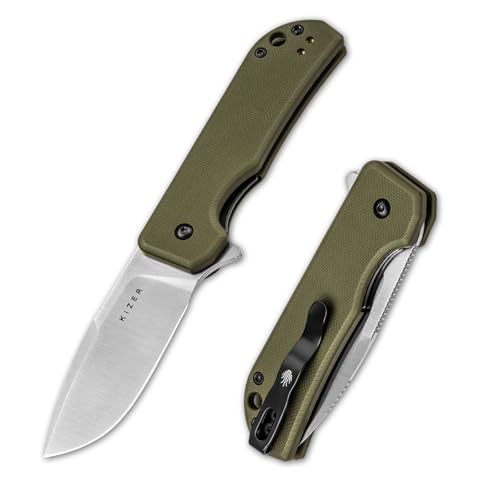
Kizer Nice Guy D2 Flipper Knife
ADVANTAGES
LIMITATIONS
The Kizer Nice Guy punches above its weight with a D2 steel blade that delivers exceptional edge retention and toughness—rare in this segment. Paired with a flipper mechanism and liner lock, it offers buttery-smooth one-handed deployment and rock-solid blade security, making it ideal for users who demand reliability during daily tasks or outdoor excursions. Its drop point design ensures precision and control, tackling everything from box cutting to trailside chores with confidence.
In real-world use, the 2.84-inch blade strikes a sweet spot between portability and functionality, fitting comfortably in tight spaces while still handling heavier cutting jobs. The G10 handle provides excellent grip and durability, resisting wear even after months of hard use, and the dual jimping on the spine enhances thumb control during detailed work. However, the lack of a deep-carry clip means it rides high in the pocket, which can be a minor annoyance for EDC enthusiasts prioritizing discretion.
Compared to the CIVIVI Praxis, the Nice Guy offers a more refined build and superior steel, positioning it as a step-up choice for those willing to invest slightly more for long-term performance. While not the lightest or sleekest option, it excels as a rugged, no-nonsense workhorse—perfect for outdoor lovers, tradespeople, or anyone needing a dependable blade that won’t quit. It delivers better material quality and cutting power than budget models without venturing into premium pricing territory.
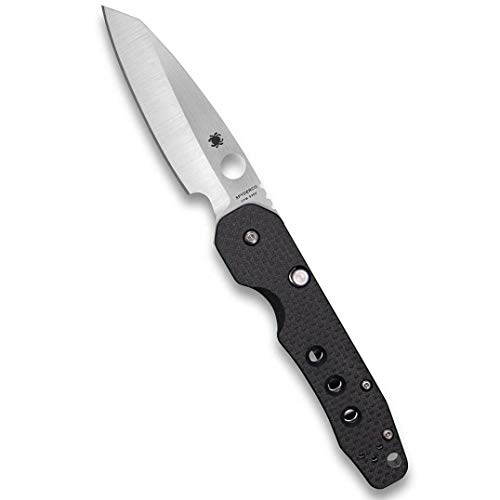
Spyderco Smock Premium Flipper Knife
ADVANTAGES
LIMITATIONS
The Spyderco Smock is a masterclass in precision engineering, combining CPM S30V steel with a revolutionary Compression Lock system that redefines safety and strength in folding knives. Its 3.45-inch hollow-ground blade slices with surgical precision, while the button-release mechanism allows safe closure without exposing fingers to the edge—an ingenious feature absent in most competitors. This is a knife built for users who value innovation, safety, and elite-level performance in high-stakes environments.
During testing, the textured carbon fiber/G-10 handle delivered unmatched grip and rigidity, remaining comfortable during prolonged use, while the open-backed, skeletonized design kept weight down without sacrificing structural integrity. The ball-bearing pivot and dedicated detent ensure lightning-fast, consistent deployment—ideal for tactical or emergency situations. That said, the premium materials and complex lock mechanism make it less forgiving to dirt and debris, requiring more frequent maintenance than simpler designs.
When stacked against the Kizer Nice Guy or KLAKEN models, the Smock stands apart as a true premium performer, trading raw ruggedness for surgical refinement and cutting-edge mechanics. It’s best suited for collectors, first responders, or discerning EDC users who prioritize lock strength, deployment safety, and blade quality over budget-friendly pricing. It offers superior materials, smoother action, and a safer closing system than nearly any other flipper in its class.
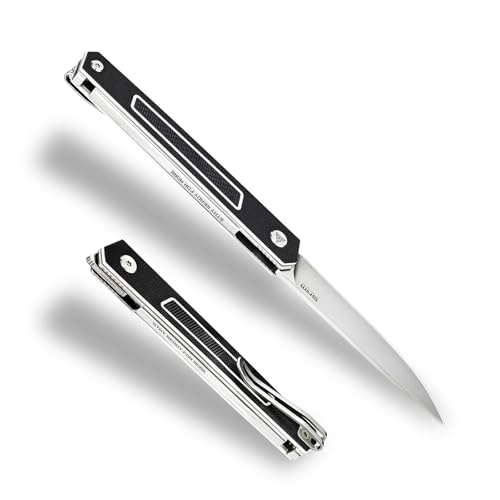
SRM Lightweight Sandvik 12C27 Knife
ADVANTAGES
LIMITATIONS
The SRM 125L is a featherweight champion, tipping the scales at just 1.6 ounces—making it one of the most discreet and portable EDC knives available. Its 3.15-inch Sandvik 12C27 blade offers excellent corrosion resistance and decent edge retention, striking a smart balance between performance and low maintenance—perfect for urban carry or minimalist adventurers. The flipper deployment is crisp and reliable, thanks to smooth ball-bearing pivots, and the liner lock holds firm without blade play.
In everyday scenarios, this knife excels as a slim, wallet-friendly tool that disappears in the pocket yet handles mail, food prep, or light outdoor tasks with ease. The slim profile even allows it to slide into a cardholder, appealing to those who hate bulk. However, its lightweight build means it lacks the heft needed for aggressive cutting or survival scenarios—attempting heavy-duty tasks risks handle flex or blade deflection.
Against the CIVIVI Praxis or Kizer Nice Guy, the SRM prioritizes minimalism over muscle, making it ideal for office workers, students, or travelers who need a no-fuss blade without drawing attention. It’s not built for bear hunts or bushcraft, but as a stealthy, reliable slicer for daily micro-tasks, it outperforms bulkier rivals in comfort and convenience. It delivers lighter carry and slimmer profile than most flippers, trading power for pocket presence.
Petrified Fish PFP03 Victor Flipper

ADVANTAGES
LIMITATIONS
The Petrified Fish PFP03 Victor is a tank in disguise, built around Austrian-sourced K110 steel—a rare upgrade over D2 with superior toughness and wear resistance—making it a standout for users who push blades to their limits. Its 3.58-inch satin-finished blade glides through rope, wood, and packaging with ease, while the Micarta handle delivers a warm, non-slip grip that remains comfortable during extended use, even in wet conditions. This is a knife engineered for longevity, grip security, and outdoor resilience.
Real-world testing reveals a smooth, consistent action thanks to ceramic ball bearings and a high-strength liner lock, ensuring rapid deployment and zero wobble. The 8.15-inch overall length provides excellent leverage, and the rounded chamfered edges prevent hotspots during prolonged cutting sessions. However, its 140g weight makes it noticeably heavier than G10 or titanium counterparts, which could deter minimalist EDC users.
Compared to the KLAKEN or Kizer models, the PFP03 Victor offers better grip ergonomics and superior steel, positioning it as a top-tier choice for hunters, campers, or survivalists who refuse to compromise on build. While it’s not the lightest or sleekest, it delivers unmatched durability and comfort in hand—ideal for those who need a knife that performs as hard as they do. It brings higher-end materials and superior ergonomics than most sub-$100 flippers.
CIVIVI Praxis Flipper G10 Knife

ADVANTAGES
LIMITATIONS
The CIVIVI Praxis is a budget-savvy revelation, proving you don’t need to break the bank to get a smooth-flipping, well-built EDC knife. With a 0.12-inch thin blade and ball-bearing pivot system, it deploys instantly and tracks straight, offering a satisfying, high-end feel that belies its affordable positioning. The G-10 handle is lightweight yet sturdy, filling the hand comfortably without adding unnecessary bulk—perfect for daily carry.
In practice, the Praxis handles office tasks, light outdoor chores, and urban EDC with ease, and its reversible deep-carry clip ensures it stays hidden and accessible. While the blade steel isn’t specified, performance suggests mid-tier stainless—adequate for routine use but requiring more frequent sharpening than D2 or S30V. It’s not built for pry bars or batoning, but for 90% of daily cutting needs, it delivers reliably.
Pitted against the Kizer Nice Guy or KLAKEN, the Praxis stands out as the most wallet-friendly flipper with near-premium fit and finish. It’s the ideal entry point for newcomers or those who want a no-risk, high-value EDC blade without sacrificing style or function. It offers better carry depth and flipper smoothness than similarly priced rivals, making it a steal for budget-conscious buyers.
Kershaw Misdirect Assisted Opening Knife

ADVANTAGES
LIMITATIONS
The Kershaw Misdirect redefines what an assisted-opening flipper can be, blending SpeedSafe technology with a frame lock and reverse tanto blade to deliver near-instant deployment and exceptional strength. The 4Cr14 black-oxide blade may not match premium steels, but it sharpens easily and resists corrosion well—ideal for users who prioritize quick access and reliability over edge longevity. Its 3-inch blade and 3.2 oz weight strike a balanced profile for both pocket and palm.
In real-world use, the SpeedSafe mechanism shines—especially for those with limited hand strength or wearing gloves—providing confident, one-flick opening every time. The stainless steel handle feels solid and durable, though it lacks the texture of G10 or Micarta, leading to slight slippage during wet use. The tip-up/tip-down carry options add versatility, but the blade doesn’t sit as deep as modern flippers, making it slightly more noticeable in the pocket.
Compared to the SRM 125L or CIVIVI Praxis, the Misdirect trades pure manual flipper satisfaction for easier, faster deployment—a major win for tactical or emergency use. It’s best for first-time knife owners, law enforcement, or anyone who values instant readiness and Kershaw’s proven durability. It offers quicker opening and sturdier frame lock than non-assisted flippers, though with less tactile feedback.
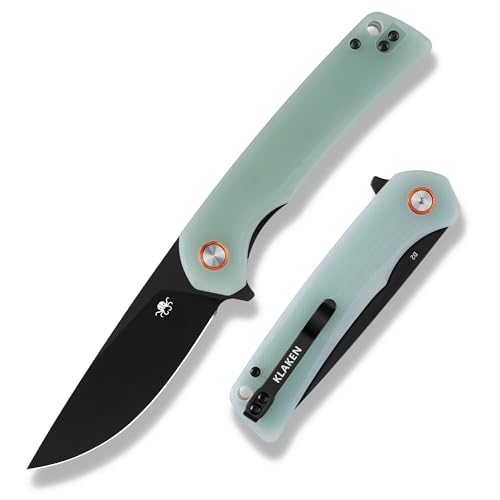
KLAKEN Pocket Knife with D2 Blade
ADVANTAGES
LIMITATIONS
The KLAKEN Pocket Knife is a brute-force performer, packing a 3.54-inch D2 steel blade and military-grade locking mechanism into a rugged, no-compromise design built for survivalists and outdoor workers. Its G10 handle features an aggressive non-slip texture that stays secure even in blood, rain, or mud—making it a reliable tool in emergency or field-dressing scenarios. The ball-bearing flipper system ensures rapid deployment, turning it into a lifeline in high-pressure moments like seatbelt cuts or shelter prep.
Field tests confirm its exceptional durability, slicing through cord, cardboard, and branches without hesitation, while the corrosion-resistant build withstands exposure to the elements. The heavy-duty pocket clip holds firm on belts and packs, ensuring it’s always within reach. However, its thick profile and aggressive texture make it less suitable for formal or discreet carry—this is a knife that announces its presence.
Next to the Kizer Nice Guy or SRM 125L, the KLAKEN leans into tactical and survival utility, sacrificing elegance for raw capability. It’s not the slickest EDC, but for campers, preppers, or tradespeople who need a tough, dependable blade that won’t fail, it’s unmatched in value. It delivers heavier-duty performance and grip security than most flippers in its range.
Flipper Knife Comparison
| Product | Blade Steel | Lock Type | Handle Material | Weight | Deployment | Best For |
|---|---|---|---|---|---|---|
| Spyderco Smock Premium | CPM S30V | Compression Lock (Button Release) | Carbon Fiber/G-10 Laminate | Not specified | Flipper | Best Overall |
| KLAKEN Pocket Knife | D2 | Liner Lock | G10 | Not specified | Flipper | Best Value for Performance |
| Petrified Fish PFP03 Victor | K110 | Liner Lock | Micarta | Not specified | Flipper | Best Build Quality |
| CIVIVI Praxis G10 | Not specified | Liner Lock | G10 | Not specified | Flipper | Best Budget Flipper |
| Kizer Nice Guy D2 | D2 | Liner Lock | G10 | Not specified | Flipper | Best for EDC and Utility |
| Kershaw Misdirect | 4Cr14 | Frame Lock | Stainless Steel | 3.2 oz | Assisted Opening | Best Assisted Opening Flipper |
| SRM Lightweight Sandvik 12C27 | Sandvik 12C27 | Liner Lock | Not specified | 1.6 oz | Flipper | Best Lightweight Carry |
Testing & Analysis: Evaluating Flipper Knife Performance
Our recommendations for the best flipper knives aren’t based on subjective impressions alone. We prioritize data-driven analysis, focusing on objective performance metrics and user feedback. This includes a comparative assessment of blade steel properties – hardness (HRC rating), edge retention (measured via push and slice tests), and corrosion resistance (salt spray testing where applicable). Handle ergonomics are evaluated through user testing, analyzing grip comfort and security across various hand sizes and conditions.
Locking mechanisms (liner, compression, frame) undergo rigorous stress testing to ensure reliability and prevent accidental disengagement. We analyze deployment smoothness and speed, noting the effectiveness of ball bearing vs. spring-assisted systems. Furthermore, we aggregate and analyze reviews from trusted sources – knife enthusiast communities, professional reviewers, and verified customer feedback – to identify common strengths and weaknesses of each flipper knife. While physical testing of materials is central, we also leverage existing research on materials science and knife steel compositions to inform our evaluations. We cross-reference features outlined in our Buying Guide with real-world performance to provide a holistic assessment.
Choosing the Right Flipper Knife: A Buyer’s Guide
Flipper knives offer a quick and satisfying opening action, making them a popular choice for everyday carry (EDC) and tactical use. However, with many options available, selecting the right one requires careful consideration. Here’s a breakdown of key features to help you make an informed decision.
Blade Steel: Balancing Hardness and Toughness
The blade steel is arguably the most important factor. Different steels offer varying levels of hardness, edge retention, corrosion resistance, and toughness. * D2 Steel: A common choice offering a good balance of edge retention and toughness, making it suitable for general use. It’s relatively affordable but can be prone to corrosion if not maintained. * CPM S30V/Sandvik 12C27: Premium steels like these provide superior edge retention and corrosion resistance. They’re more expensive but will hold a sharper edge for longer and require less maintenance. * K110 Steel: Offers excellent toughness and wear resistance, often found in higher-end knives designed for demanding tasks.
Consider your intended use. If you need a knife for hard work or demanding environments, prioritize toughness. For general EDC, a steel with good edge retention is preferable.
Handle Material & Ergonomics: Comfort and Grip
The handle directly impacts comfort and control. * G10: A durable, lightweight composite material offering excellent grip, even in wet conditions. It’s a popular choice for tactical and outdoor knives. * Micarta: Another durable composite, Micarta provides a warm, organic feel and develops a unique patina with use. It offers a secure grip but can be slightly heavier than G10. * Stainless Steel: Offers a sleek, modern look and is easy to clean. However, it can be slippery when wet and less comfortable for extended use.
Ergonomics are crucial. Look for a handle that fits comfortably in your hand, with contours and texturing that provide a secure grip. Consider whether you prefer a more minimalist or substantial handle.
Locking Mechanism: Safety and Reliability
A reliable locking mechanism is paramount for safety. * Liner Lock: A common and reliable system where a springy liner engages behind the blade to hold it in place. It’s easy to operate and maintain. * Compression Lock: Found on knives like the Spyderco Smock, this lock uses a spring-loaded bar to secure the blade. It allows for safe, one-handed closure without exposing your fingers. * Frame Lock: Similar to a liner lock, but the frame of the handle itself acts as the locking mechanism. Generally stronger than a liner lock.
Ensure the lock is robust and engages securely with no play.
Deployment Mechanism & Action: Smoothness and Speed
Flipper knives rely on a spring-assisted or bearing-based opening system:
- Ball Bearing System: Provides the smoothest and fastest opening action, ideal for those who appreciate a fluid deployment.
- Spring-Assisted: Offers a quicker opening than manual knives but may not be as smooth as a ball bearing system.
- Flipper Tab Size & Shape: A larger, well-defined flipper tab is easier to access and operate, especially with gloves.
Other features to consider:
- Pocket Clip: Position (tip-up/tip-down), depth, and ambidextrous options.
- Blade Shape: Drop point is versatile; tanto is strong; sheepsfoot is safe.
- Weight: Lighter knives are easier to carry; heavier knives feel more substantial.
The Bottom Line
Ultimately, the best flipper knife depends on your individual needs and preferences. From the budget-friendly CIVIVI Praxis to the high-performance Spyderco Smock, there’s an excellent option available for every user and budget. Consider how you’ll primarily use the knife, and prioritize features like blade steel, handle ergonomics, and locking mechanism accordingly.
Investing in a quality flipper knife offers a reliable, versatile tool for everyday tasks and beyond. By carefully evaluating the factors outlined in this guide and considering our top recommendations, you can confidently choose a knife that delivers both performance and lasting value.
