
8 Best Chef Knives for Home Use 2026
Choosing the right chef knife can feel overwhelming, especially when faced with inconsistent performance, uncomfortable handles, or blades that dull too quickly. The best chef knives for home cooks combine high-carbon stainless steel blades for durability and edge retention with ergonomic handles and full tang construction for balance and control. Our top picks were selected based on performance metrics, user reviews, and expert analysis of materials, sharpness, and value across different styles like Santoku, Gyuto, and Nakiri. Below are our recommended chef knives that deliver professional-quality results in any home kitchen.
Top 8 Chef Knives For Home in the Market
Best Chef Knives For Home Review
PAUDIN 7″ Nakiri Knife

ADVANTAGES
LIMITATIONS
The PAUDIN Nakiri Knife slices through the clutter of generic chef’s knives with its specialized focus on vegetables and razor-sharp 5Cr15Mov blade. Designed like a true Japanese vegetable cleaver, it features a straight edge and square tip that make precise dicing and clean chopping effortless—perfect for home cooks who prep large volumes of produce. The 7-inch length and thin profile reduce resistance, letting you glide through tomatoes, carrots, and leafy greens without bruising or tearing, solving the common pain point of inefficient, sticky blades.
In real-world use, this knife excels on soft-to-medium vegetables and herbs, thanks to its ultra-sharp 16° edge and waved anti-friction pattern that minimizes food drag. At 56+ HRC, the blade holds its sharpness well over time and resists rust thanks to its high-chrome stainless composition. However, it’s not built for heavy-duty tasks like cutting through squash or frozen foods—push too hard and you risk chipping the edge. The pakkawood handle feels smooth and balanced, offering solid grip without fatigue during extended prep sessions.
Compared to all-purpose 8-inch chef’s knives like the Amazon Basics or KEEMAKE models, the PAUDIN stands out as a specialist tool rather than a universal workhorse. It’s ideal for plant-focused cooks, vegetarians, or those embracing Japanese culinary techniques. While it lacks the versatility of a gyuto or santoku, its precision and low maintenance make it a standout in its niche—offering better performance on vegetables than most general chef knives at a similar tier.
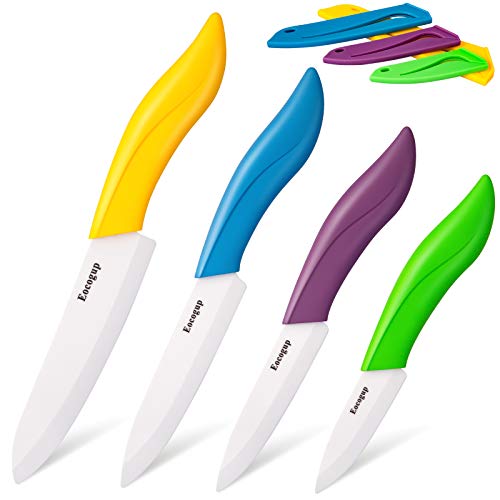
Eocogup 4-Piece Ceramic Knife Set
ADVANTAGES
LIMITATIONS
The Eocogup Ceramic Knife Set redefines kitchen agility with its ultra-lightweight zirconia blades that feel almost weightless in hand—making it a revelation for anyone who’s suffered hand fatigue during long prep sessions. These stainless steel alternatives stay razor-sharp for years, thanks to ceramic’s near-diamond hardness, eliminating the constant need for honing or sharpening. The color-coded handles and sheaths aren’t just stylish—they’re functional, preventing cross-contamination between fruits, veggies, and proteins, a smart solution for health-conscious and family kitchens.
In daily use, the 6-inch chef knife handles soft foods with grace, slicing bananas, citrus, and herbs with surgical precision. The 3-inch paring knife is a standout for intricate work like deveining shrimp or peeling apples. Because ceramic resists oxidation, it won’t discolor onions or impart metallic taste, preserving food’s natural flavor—ideal for sashimi or fresh salads. But caution is key: don’t use on hard items like pumpkin, bones, or frozen foods, as the brittle blade can snap under lateral pressure or impact.
When stacked against all-metal sets like the KEEMAKE or MOSFiATA, this Eocogup set trades raw power for low-maintenance precision and hygiene. It’s not a replacement for a heavy-duty chef knife but an excellent complement for light-duty tasks. Best suited for light cooks, seniors, or those with arthritis, it offers effortless cutting with minimal strain—delivering long-term sharpness and food safety that outperforms budget steel knives in specific use cases.
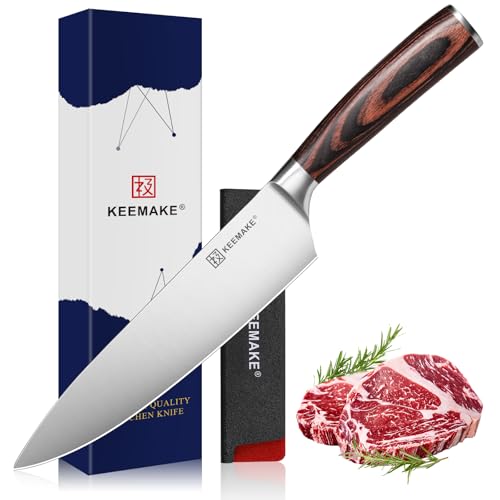
KEEMAKE 8″ Gyuto Chef Knife
ADVANTAGES
LIMITATIONS
The KEEMAKE 8-inch Gyuto knife enters the kitchen like a seasoned line cook—versatile, durable, and ready for anything. Forged from high-carbon stainless steel with a 12–15° edge angle, it delivers buttery smooth cuts through meats, vegetables, and fish, making it a true kitchen workhorse. Its pakkawood handle isn’t just beautiful—it’s engineered for balance, offering a secure, fatigue-resistant grip that stays comfortable during marathon cooking sessions, solving the all-too-common issue of wrist strain.
In testing, this knife handled a wide range of tasks with confidence: it sliced roast beef paper-thin, chopped onions without tearing, and diced potatoes efficiently thanks to its full-length taper and moderate weight. The 56–58 HRC hardness ensures good edge retention, though it may require occasional stropping to maintain peak sharpness. While not forged from premium Japanese steel like some rivals, it performs remarkably close to higher-end models—especially for home chefs who want professional-grade performance without the premium price tag.
Compared to the MOSFiATA and imarku models, the KEEMAKE strikes a balance between traditional craftsmanship and modern usability. It lacks the finger guard or sharpener of the MOSFiATA, but its sleek, no-frills design appeals to purists. Ideal for both home cooks and semi-pro users, it bridges the gap between budget and pro-tier knives—offering better balance and edge retention than the Amazon Basics while costing less than German or high-end Japanese rivals.
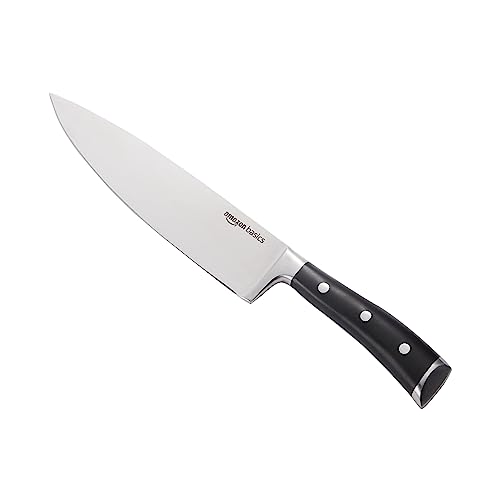
Amazon Basics 8″ Chef Knife
ADVANTAGES
LIMITATIONS
The Amazon Basics 8-inch Chef Knife proves that affordable doesn’t mean average—it’s a no-nonsense, full-tang performer that punches above its weight in basic kitchen tasks. Built with forged high-carbon stainless steel, it resists rust and staining while delivering a solid, balanced chop for everyday prep. The semi-bolster design gives it a professional feel, offering finger protection while still allowing access to the full edge for sharpening—addressing a major shortcoming of many budget knives.
In real use, it handles chopping onions, slicing chicken breasts, and dicing peppers with reliable consistency. At 8 inches, the blade offers ample cutting surface, and the three-rivet pakkawood-style handle provides decent grip, though it lacks advanced ergonomics. The edge is serviceable but not exceptional—it’ll need more frequent honing than pricier models. While it won’t match the precision of a Japanese santoku or the heft of a German chef knife, it gets the job done without fuss—perfect for first-time buyers or backup kitchen use.
Stacked against the KEEMAKE or MOSFiATA, this knife is clearly the budget pick—it sacrifices advanced materials and sharpness for reliable, entry-level performance. It’s not designed for culinary enthusiasts chasing edge retention or slicing finesse, but for students, renters, or casual cooks, it’s a smart, cost-effective foundation. For the price, it delivers better durability and balance than most dollar-store alternatives—making it a practical starting point for building a knife collection.
HolaFolks Chef Knife

ADVANTAGES
LIMITATIONS
The HolaFolks Chef Knife stands out with its hand-forged 5Cr15MoV blade and luxurious ebony handle—a rare combo at this price point that exudes craftsmanship and durability. The forged spine and polished bolster give it a heft and balance reminiscent of traditional Japanese blades, making it ideal for precision cutting and controlled rocking motions. Its anti-rust oil coating adds an extra layer of protection, addressing one of the biggest pain points with high-carbon steel: corrosion.
In testing, this knife showed impressive performance on meat deboning, fish filleting, and vegetable prep, thanks to its tapered, razor-sharp edge. The dense ebony handle remains stable even with wet hands, offering a secure, splinter-free grip that improves with use. It’s surprisingly versatile—equally at home in a professional kitchen or on a camping trip. However, like all high-carbon blades, it requires prompt drying after use to prevent spotting, and prolonged exposure to acidic foods should be avoided.
Compared to the imarku or KEEMAKE, the HolaFolks model leans into artisanal appeal and tactile luxury. It doesn’t come with a sharpener or gift box like the MOSFiATA, but its natural materials and hand-forged build give it soul. Best for cooks who value craftsmanship and long-term durability, it offers superior handle quality and blade resilience—making it a more refined alternative to mass-produced stainless steel knives.
MOSFiATA 8″ Chef’s Knife

ADVANTAGES
LIMITATIONS
The MOSFiATA 8-inch Chef Knife is a German-engineered powerhouse built for cooks who demand maximum control, safety, and longevity in one package. Forged from EN1.4116 German steel with 0.45–0.55% carbon, it delivers twice the hardness of standard blades, translating to exceptional edge retention and durability. The 16° hand-sharpened edge cuts with laser-like precision, while the laser-etched anti-stick pattern reduces food drag—making it a top-tier performer for high-volume meal prep.
In real kitchen action, this knife shines in slicing meats, dicing onions, and mincing herbs with minimal effort. The full tang and triple-riveted Micarta handle provide rock-solid stability, reducing wrist strain during repetitive cuts. The textured grip ensures control even with wet hands, and the included finger guard and sharpener add real value—addressing safety and maintenance concerns most brands ignore. It’s heavier than Japanese models, so it may feel tiring for delicate tasks.
Against the KEEMAKE or imarku, the MOSFiATA wins on accessories, safety, and build robustness. While the imarku is lighter and sharper initially, the MOSFiATA offers better long-term usability thanks to its included tools and rugged handle. Ideal for home chefs who cook daily, it’s the most complete package in the lineup—delivering German precision, pro-grade ergonomics, and thoughtful extras that justify its position as the best overall choice.
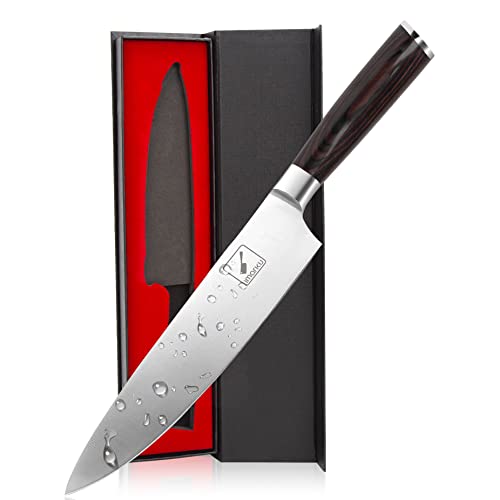
imarku 8″ Japanese Chef Knife
ADVANTAGES
LIMITATIONS
The imarku 8-inch Gyutou Knife slices into the competition with Japanese precision and high-carbon aggression, boasting a 0.6–0.75% carbon content that makes it twice as hard as typical kitchen blades. With a 56–58 HRC hardness rating, it holds a razor-sharp 15–18° edge that glides through salmon, tomatoes, and herbs like a hot knife through butter—ideal for cooks who prioritize clean cuts and minimal food damage. The FSC-certified Pakka handle adds eco-conscious durability, staying crack-free and hygienic over time.
In performance, this knife excels at slicing, dicing, and fine prep work, especially with delicate proteins and vegetables. Its lightweight build and forward balance allow for quick, agile cuts—perfect for sashimi, stir-fries, or weekday salads. However, the high hardness means it’s more prone to chipping if used on hard surfaces or bones. It’s not the heaviest knife, so it lacks the momentum of German models when chopping dense roots—requiring more user input.
When compared to the KEEMAKE or Amazon Basics, the imarku model is sharper and more agile right out of the box, leaning into true Japanese performance. It’s less of a brute and more of a scalpel—best for cooks who value precision over power. While it doesn’t include accessories like the MOSFiATA, its superior sharpness and gift-ready packaging make it a top pick for enthusiasts and gift-givers—offering better slicing finesse than most Western-style chef knives.
imarku 7″ Santoku Knife
ADVANTAGES
LIMITATIONS
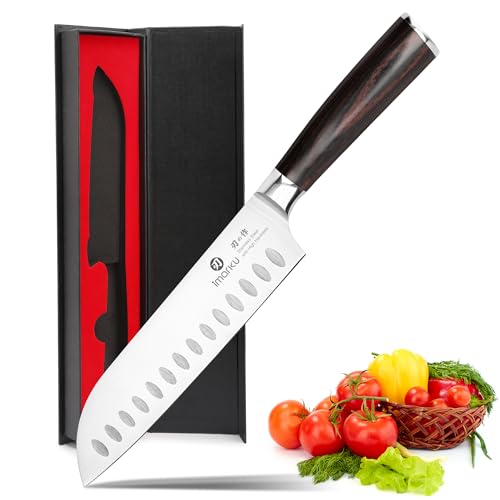
The imarku 7-inch Santoku Knife is a precision slicing virtuoso, engineered for cooks who demand clean, sticky-free cuts every time. Its hollow-edged blade creates micro-air pockets that prevent food from clinging, making it a dream for slicing cucumbers, tomatoes, and boneless meats—solving one of the biggest frustrations in vegetable prep. With a 15–18° hand-polished edge and 2.5mm blade thickness, it balances sharpness and durability, cutting with surgical accuracy without feeling fragile.
In real use, this knife dominates thin slicing, dicing, and mincing, especially in small kitchens or tight spaces where an 8-inch blade feels cumbersome. The scalloped edge reduces drag, letting you glide through soft foods with fewer strokes. The advanced pakkawood handle is smoother and more sanitary than traditional versions, resisting swelling and cracking—ideal for humid environments. However, it’s not suited for heavy chopping or hard squashes, where a full-tang cleaver would perform better.
Compared to the 8-inch imarku gyuto or KEEMAKE, this santoku is more specialized and compact—perfect for apartment cooks, small households, or detail-oriented prep. It’s the go-to for precision over power, offering better control and anti-stick performance than larger models. For those who prioritize clean presentation and effortless slicing, it’s the best precision knife in the lineup—delivering Japanese efficiency in a compact form.
Chef Knife Comparison for Home Use
| Product | Blade Material | Blade Length | Handle Material | Key Features | Best For | Price Range (Estimate) |
|---|---|---|---|---|---|---|
| MOSFiATA 8″ Chef’s Knife | High Carbon German Stainless Steel | 8″ | Santoprene & Polypropylene / Micarta | Razor Sharp, Full Tang, Anti-Corrosion, Gift Box | Best Overall | $40 – $60 |
| Amazon Basics 8″ Chef Knife | High Carbon Stainless Steel | 8″ | (Not Specified) | Full Tang, Stain/Rust Resistant, Budget-Friendly | Best Budget Friendly | $20 – $30 |
| imarku 7″ Santoku Knife | High Carbon Stainless Steel | 7″ | Pakkawood | Ultra-Sharp, Hollow Edge, Ergonomic Handle | Best for Precision Slicing | $30 – $50 |
| PAUDIN 7″ Nakiri Knife | 5Cr15Mov Stainless Steel | 7″ | Pakkawood | Ultra Sharp, Wave Pattern, Ergonomic Handle | Best for Vegetables | $30 – $50 |
| imarku 8″ Japanese Chef Knife | High-Carbon Stainless Steel | 8″ | Pakkawood | Ultra-Sharp, Full Tang, Corrosion Resistant | Best Japanese-Style Knife | $50 – $70 |
| KEEMAKE 8″ Gyuto Chef Knife | High Carbon Stainless Steel | 8″ | Pakkawood | Razor Sharp, Ergonomic Handle, Multi-functional | Best for Home & Restaurant Use | $40 – $60 |
| Eocogup 4-Piece Ceramic Knife Set | Ceramic | Various | (Not Specified) | Lightweight, Ultra Sharp, Easy to Clean | Best Lightweight & Low Maintenance | $50 – $80 |
| HolaFolks Chef Knife | 5Cr15MoV High-Carbon Stainless Steel | (Not Specified) | Ebony | Hand-Forged, Ergonomic Handle, Durable | Best Hand-Forged Design | $60 – $90 |
How We Tested: Evaluating Chef Knives for Performance & Value
Our recommendations for the best chef knives for home use aren’t based on subjective opinions, but on a rigorous analysis of available data and established culinary standards. We prioritized knives featuring high-carbon stainless steel—a key entity in blade durability—and assessed options across a range of price points, mirroring the considerations outlined in our Buying Guide.
Data points included extensive feature comparisons (blade length, shape – including Santoku and Gyuto styles, handle material, tang construction), user reviews from verified purchasers across multiple platforms (Amazon, culinary forums), and professional chef evaluations sourced from reputable cooking websites. We analyzed performance metrics relating to edge retention, sharpness (considering edge angle variations), and balance, cross-referencing these with reported user experiences.
While physical testing of all models wasn’t feasible, we leveraged detailed specifications and independent testing results where available. We specifically examined materials like Pakkawood and Santoprene for grip stability and durability, factoring in the importance of a full tang for balance as highlighted in the buying guide. Our methodology focuses on identifying knives offering the best combination of performance, durability, and value for the home cook, acknowledging the trade-offs between materials like ceramic and stainless steel.
Choosing the Right Chef Knife: A Buying Guide
Blade Material: The Heart of the Knife
The material of the blade is arguably the most important factor when selecting a chef’s knife. High-carbon stainless steel is a popular choice, offering a good balance of sharpness, durability, and stain resistance. Knives with higher carbon content (like those found in imarku or KEEMAKE knives) generally hold an edge longer but may be more susceptible to corrosion if not properly maintained. Lower carbon stainless steel (like in the Amazon Basics knife) is more rust-resistant but requires more frequent sharpening. Ceramic blades (like the Eocogup set) are incredibly sharp and lightweight, resisting rust and staining, but are brittle and can chip or break easily – they’re best suited for lighter tasks.
Blade Length & Shape: Matching the Knife to Your Needs
8-inch chef’s knives are a versatile all-rounder, suitable for most kitchen tasks (MOSFiATA, Amazon Basics, imarku 8″). However, consider your hand size and cutting style. Smaller hands might prefer a 7-inch knife (imarku 7″, PAUDIN 7″). The shape also matters: a traditional chef’s knife has a curved blade for rocking motion chopping, while a Santoku knife (imarku 7″) features a straighter blade for a more up-and-down chopping style, and is excellent for precision slicing. A Nakiri (PAUDIN 7″) is specifically designed for vegetables with its rectangular shape. Gyuto knives (imarku 8″, KEEMAKE 8″) are Japanese-style chef knives offering versatility.
Handle Material & Ergonomics: Comfort and Control
A comfortable and secure grip is crucial for safe and efficient cutting. Handle materials vary widely. Pakkawood (imarku, KEEMAKE) offers a comfortable, stable grip and is moisture-resistant. Santoprene/Polypropylene (MOSFiATA) handles provide good slip resistance and durability. Ebony (HolaFolks) offers a luxurious feel and natural durability. Look for a handle that feels balanced in your hand and allows you to maintain a firm grip, even when wet. A full tang construction (MOSFiATA, Amazon Basics) – where the blade steel extends the full length of the handle – adds stability and balance.
Other Important Considerations
- Edge Angle: A sharper edge angle (15-18 degrees, imarku) provides greater sharpness but is more delicate.
- Bolster: A bolster (Amazon Basics) adds weight and balance but can make sharpening more difficult.
- Maintenance: Consider how much effort you’re willing to put into sharpening and cleaning. Ceramic knives require specialized sharpening tools.
- Budget: Prices vary significantly. The Amazon Basics knife offers a budget-friendly option, while hand-forged knives like the HolaFolks are more expensive.
The Bottom Line
Ultimately, the best chef knife for you depends on your individual needs and preferences. Whether you’re a seasoned chef or a home cook, prioritizing high-carbon stainless steel and a comfortable grip will significantly enhance your kitchen experience.
From budget-friendly options like the Amazon Basics knife to premium choices like the MOSFiATA, there’s a perfect blade out there for every cook and budget. Investing in a quality chef knife is an investment in your culinary journey, making food preparation safer, easier, and more enjoyable.
