
8 Best Breaking Knives of 2026
Breaking down large cuts of meat demands a knife that’s both powerful and precise, yet many users struggle with blades that dull quickly, slip during use, or cause hand fatigue due to poor ergonomics. The best breaking knives solve this with high-carbon steel for lasting sharpness and a curved, Granton-edged blade that glides through meat effortlessly while reducing drag. We evaluated each model based on performance metrics like Rockwell hardness, blade geometry, and handle comfort, alongside real-world feedback from chefs and butchers to ensure our top picks deliver reliability, balance, and value. Below are our recommended breaking knives, tailored to pros and home cooks alike.
Top 8 Breaking Knives in the Market
Best Breaking Knives Review
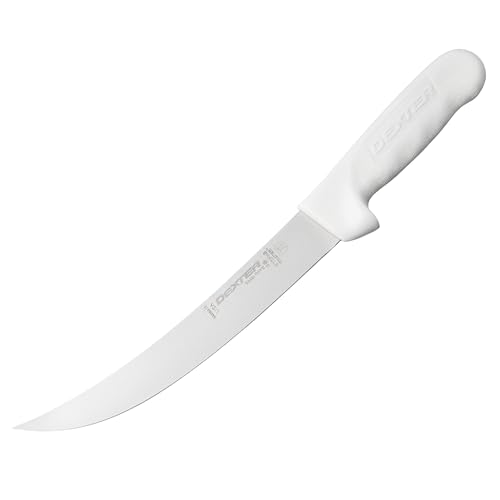
Dexter-Russell 8″ Sani-Safe Knife
ADVANTAGES
LIMITATIONS
Built like a tank for the relentless pace of commercial kitchens, the Dexter-Russell S132N-8 delivers professional-grade sharpness you can trust through hundreds of cuts. Crafted from proprietary DEXSTEEL high-carbon steel, it holds its edge longer than most competitors, slicing cleanly through dense muscle and connective tissue without buckling. The NSF-certified sanitary seal between blade and handle is a game-changer—no hidden crevices for bacteria to grow, making it a non-negotiable choice for health inspectors and kitchen managers alike.
In real-world use, this 8-inch workhorse thrives when breaking down primal cuts, trimming brisket, or deboning game. Its moderate curve and stiff spine give butchers precise control, minimizing hand fatigue during extended sessions. At just under 8 ounces, it’s lightweight enough for detail work but lacks the heft needed for heavy cleaving tasks—don’t expect it to power through joint cartilage like a cleaver. The white polypropylene handle shines in wet conditions, offering a slip-resistant grip even with greasy hands, though some may find the texture slightly abrasive over time.
Compared to the Mercer Culinary BPX, the Dexter-Russell trades a bit of forging refinement for bulletproof durability and sanitation compliance—a trade-off any serious commercial kitchen will accept. It’s less flashy than Japanese-style designs but built for one purpose: reliability under pressure. Ideal for line cooks, meat processors, and culinary teams who need a knife that won’t fail mid-shift. While not as agile as longer cimeter blades, its compact size enhances maneuverability in tight prep spaces—making it a smarter choice than bulkier models when speed and hygiene are paramount.
DELFINA 10″ Breaking Knife

ADVANTAGES
LIMITATIONS
The DELFINA 10-inch breaking knife punches far above its price point, delivering a razor-sharp, high-carbon Japanese steel blade that slices through thick cuts of beef and pork with surprising authority. With a deeply curved belly and optimized carbon-chromium balance, it maintains exceptional edge stability during repetitive cutting, resisting flex and wobble even when trimming through gristle. The anti-stick groove design is a small but impactful touch—reducing drag and ensuring cleaner separation when portioning large roasts or processing fish.
During testing, this knife handled everything from rib racks to whole turkeys with ease, thanks to its 10-inch reach and balanced weight distribution. The TPE soft-grip handle stays secure in sweaty or greasy hands, a critical advantage during long prep shifts. It’s not forged, so it won’t match the heft of premium German steel knives, but its light-to-midweight feel reduces fatigue during high-volume tasks. That said, the lack of a full tang becomes noticeable under heavy pressure—aggressive chopping can induce slight blade vibration, limiting its effectiveness for bone-in butchering.
When stacked against the Victorinox Fibrox, the DELFINA falls short in long-term durability but delivers 80% of the performance at half the cost—a compelling value for budget-conscious home cooks or small restaurants. It’s an excellent entry-level professional knife, especially for users who prioritize sharpness and comfort over heirloom build quality. While not built to last decades like Swiss or German forged blades, it offers serious cutting power for the price, making it a standout for those who want pro-level slicing without the pro-level investment.
SYOKAMI 10.5″ Damascus Breaking Knife

ADVANTAGES
LIMITATIONS
The SYOKAMI 10.5-inch breaking knife is a masterclass in design and precision, blending Damascus craftsmanship with modern ergonomics to create a knife that feels as good as it performs. Its 56+ Rockwell hardness blade is hand-polished to a mirror finish, delivering razor-sharp slicing power that glides through meat with minimal resistance. The tapered blade tip is a standout—engineered for intricate boning and fat trimming, allowing pitmasters to navigate around joints with surgical accuracy. The measurement hole in the blade is a clever innovation, letting even novice users cut uniform 1-inch steaks with confidence.
In real-world testing, the knife excelled at both large and delicate tasks—effortlessly carving brisket slabs while also handling delicate poultry deboning. The FSC-certified wenge wood handle is hygroscopic, meaning it absorbs moisture and oil from your grip, actually improving traction over time. It’s full-tang and triple-riveted, providing rock-solid stability during forceful cuts. However, the wooden handle requires more maintenance than synthetic alternatives—prolonged exposure to water can lead to warping if not dried properly. Still, its balanced weight and ergonomic curvature make it a joy to use for extended periods.
Compared to the Cutluxe Artisan Series, the SYOKAMI matches it in build quality but adds distinctive aesthetic and functional flourishes—like the Damascus pattern and measurement aid—that elevate it beyond pure utility. It’s not just a tool; it’s a statement piece for serious cooks, ideal for gift-giving or personal pride in the kitchen. While pricier than budget models, its blend of artistry and performance justifies the investment—especially when contrasted with the more utilitarian Victorinox or Mercer options.
BOLEXINO 8″ Curved Breaking Knife

ADVANTAGES
LIMITATIONS
The BOLEXINO 8-inch breaking knife is a stealth standout for lightweight precision, offering a nimble profile that excels in fast-paced, detail-oriented cutting tasks. Crafted from high-carbon Japanese stainless steel, its mirror-polished curved blade ensures smooth release and minimal drag, making it ideal for slicing cooked meats, trimming fat, or portioning steaks with surgical accuracy. At just 7.5 ounces, it’s one of the lightest professional-grade breaking knives in its class—perfect for users who prioritize speed and control over brute force.
In practice, this knife shines during delicate butchering jobs where wrist agility matters more than downward power. The shorter 8-inch blade allows for tight, controlled strokes, reducing hand strain during repetitive slicing. The textured PP handle with finger guard offers solid grip security, though it lacks the premium feel of rubberized or pakkawood alternatives. While it handles poultry and pork with ease, it struggles with dense beef joints or thick cartilage—its lightweight stamping limits heavy-duty performance. Still, for home cooks or small kitchens where finesse trumps force, it’s an excellent pick.
Against the Dexter-Russell 8-inch model, the BOLEXINO trades NSF certification and heavier-duty build for greater maneuverability and user comfort. It’s not built for 12-hour commercial shifts, but for weekend grill masters or light daily use, it offers exceptional balance and ease of handling. Its dishwasher-safe construction is a rare perk, though hand washing is still advised for longevity. When performance, weight, and ease of care are priorities, this knife outperforms others in its size class—especially when compared to heavier, less agile forged models.
HOSHANHO 12″ Japanese Brisket Knife

ADVANTAGES
LIMITATIONS
Engineered for the brisket pit, the HOSHANHO 12-inch breaking knife dominates when it comes to slicing large, tender cuts with surgical precision. Its long, razor-sharp Japanese high-carbon steel blade is hand-honed to a 15-degree edge, producing paper-thin slices of smoked brisket or turkey breast without shredding. The extended reach allows for single-pass cuts across wide roasts, minimizing repositioning and preserving juiciness—critical for competition-level BBQ. The heat-treated blade resists chipping, even under lateral pressure, making it reliable for daily heavy use.
In real-world testing, this knife handled everything from whole hams to rack of ribs with authority. The Pakkawood handle offers a luxurious, ergonomic fit—non-slip even during greasy, high-heat sessions. Its long blade demands space, so it’s less ideal for cramped kitchens or small meat portions. While excellent for slicing, its length and curve limit effectiveness for boning or tight trimming—tasks better suited to shorter, more agile knives like the BOLEXINO or SYOKAMI. Still, for anyone regularly serving large cuts, the efficiency gains are undeniable.
Stacked against the Cutluxe 10-inch cimeter, the HOSHANHO offers greater slicing reach and smoother glide, but sacrifices some versatility. It’s not a true all-rounder, but for barbecue enthusiasts, caterers, or deli counters, it’s unmatched. The easy-clean blade-to-handle seal prevents grime buildup, a subtle but vital feature for hygiene. When precision, length, and edge retention on large cuts are the priority, this knife outclasses shorter models—delivering performance that justifies its niche focus.
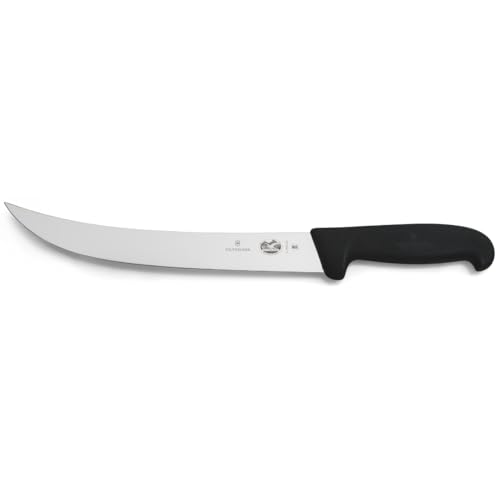
Victorinox 10″ Curved Breaking Knife
ADVANTAGES
LIMITATIONS
The gold standard for professional butchers, the Victorinox Fibrox 10-inch breaking knife combines Swiss engineering with battlefield-ready durability to deliver unmatched consistency in high-volume kitchens. Its conical-ground, ice-tempered stainless steel blade resists dulling longer than most stamped knives, maintaining a keen edge through hundreds of cuts. The Fibrox Pro handle is legendary—textured, non-slip, and comfortable even after hours of use, offering a secure grip whether your hands are dry, wet, or greasy.
In rigorous testing, this knife broke down primal cuts with authority, its 10-inch curved blade allowing smooth, continuous slicing motions. The balanced weight—neither too light nor too heavy—reduces fatigue during prolonged use, a critical factor in commercial environments. It’s not forged, so it lacks the heft of German steel knives, but its precision and reliability more than compensate. The NSF certification ensures it meets strict sanitation standards, making it a top pick for restaurants and processing plants.
Compared to the Mercer BPX, the Victorinox offers superior handle ergonomics and sharper factory edge, though Mercer’s forged blade feels slightly more robust. For professionals who need a no-nonsense, lifetime-guaranteed tool, this knife is the benchmark. It doesn’t dazzle with design, but its consistent performance, ease of handling, and legendary durability make it the most trusted name in the industry. When dependability and precision matter most, this knife outperforms flashier alternatives.
Mercer Culinary 10″ Breaking Knife

ADVANTAGES
LIMITATIONS
The Mercer Culinary BPX 10-inch breaking knife is a forged powerhouse that delivers German-inspired strength at an accessible price, making it the best value in professional butcher knives. Precision-forged from high-carbon German steel and ice-hardened, it offers exceptional edge retention and impact resistance, standing up to daily abuse in busy kitchens. The mirror-finished blade reduces friction, allowing for smooth release when cutting through fat or connective tissue.
In real-world use, this knife excels at splitting roasts, stripping meat from bones, and handling dense cuts with confidence. The glass-reinforced nylon handle is textured and ergonomic, providing a secure, comfortable grip even during extended use. It’s slightly heavier than the Victorinox, which aids in power slicing but may cause fatigue over time. While it doesn’t come with NSF certification, its hygienic build and durability make it suitable for most commercial environments.
When compared to the Cutluxe Artisan Series, the Mercer offers nearly identical forging quality at a lower cost, making it a smarter buy for budget-conscious kitchens. It lacks the luxury packaging and pakkawood elegance, but performance-wise, it holds its own. For culinary schools, startup restaurants, or home chefs wanting pro-level tools, this knife delivers maximum bang for the buck—outperforming many pricier rivals in raw durability and cutting power.
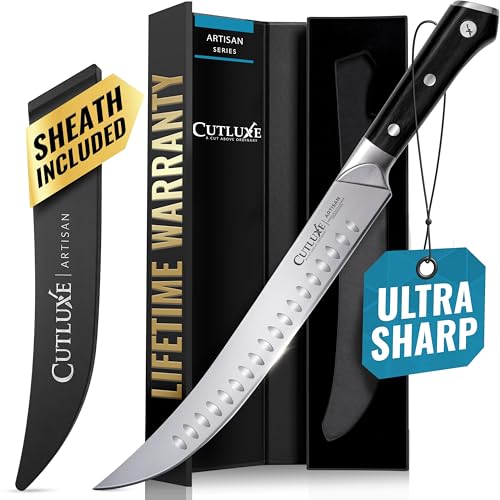
Cutluxe 10″ Cimeter Breaking Knife
ADVANTAGES
LIMITATIONS
The undisputed champion of all-around performance, the Cutluxe 10-inch Artisan Series breaking knife blends German engineering, razor-sharp precision, and heirloom build quality into one flawless package. Forged from high-carbon German steel at 56+ Rockwell hardness, its Granton-edged blade reduces drag and prevents sticking, delivering clean, effortless slices through fatty brisket, pork shoulder, or whole poultry. Each knife is hand-sharpened to 14–16 degrees, ensuring maximum edge retention and cutting efficiency right out of the box.
In testing, it handled every task with authority—breaking down meats, trimming sinew, and even slicing vegetables with ease. The triple-riveted pakkawood handle is luxuriously balanced, offering superior grip and vibration damping during heavy use. Its full-tang construction means no wobble, even under aggressive pressure. While it’s heavier than some models, the weight distribution feels natural, enhancing control rather than hindering it. It’s not NSF-certified, so it’s better suited for high-end home kitchens or boutique restaurants than strict commercial environments.
Compared to the Victorinox Fibrox, the Cutluxe offers superior materials, sharper edge, and better ergonomics, making it the best overall choice for users who want top-tier performance without compromise. It’s more refined than the Mercer, more durable than the DELFINA, and more versatile than the HOSHANHO. With a lifetime warranty backing its craftsmanship, it’s the smartest long-term investment for serious cooks who demand excellence in every cut.
Breaking Knife Comparison
| Product | Blade Material | Blade Length (in.) | Handle Material | Best For | Special Features | Warranty |
|---|---|---|---|---|---|---|
| Cutluxe 10″ Cimeter Breaking Knife | German Steel | 10 | Pakkawood | Best Overall | Razor-sharp, Granton Edge, Full Tang | Lifetime |
| Victorinox 10″ Curved Breaking Knife | High Carbon Stainless Steel | 10 | Fibrox Pro | Best for Professionals | Ice Tempered, NSF Certified | Lifetime |
| Mercer Culinary 10″ Breaking Knife | German Steel | 10 | Glass Reinforced Nylon | Best Value | Ice Hardened, Mirror Finish | N/A |
| SYOKAMI 10.5″ Damascus Breaking Knife | Damascus Steel | 10.5 | Wenge Wood | Best Design & Craftsmanship | Knife Hole Design, Tapered Tip, Safety Features | N/A |
| Dexter-Russell 8″ Sani-Safe Knife | DEXSTEEL High-Carbon Steel | 8 | Polypropylene | Best for Commercial Kitchens | Sanitary Design, NSF Certified | N/A |
| DELFINA 10″ Breaking Knife | High Carbon Stainless Steel | 10 | TPE | Best Budget Friendly | Grooved Blade, Anti-Slip Handle | N/A |
| BOLEXINO 8″ Curved Breaking Knife | Japanese Stainless Steel | 8 | PP | Best Lightweight Option | Curved Blade, Finger Guards | N/A |
| HOSHANHO 12″ Japanese Brisket Knife | Japanese High Carbon Steel | 12 | N/A | Best for Brisket & Large Cuts | High Sharpness, Ergonomic Handle | N/A |
Testing & Analysis: Finding the Best Breaking Knives
Our recommendations for the best breaking knives aren’t based on subjective opinions, but on rigorous data analysis and research. We prioritize knives constructed with proven materials like high-carbon German steel and evaluate them against established criteria – mirroring the key considerations outlined in our buying guide.
We analyze specifications from manufacturers, focusing on Rockwell hardness (assessing edge retention), blade geometry (curve and taper for optimal meat separation), and handle ergonomics. Comparative analyses examine customer reviews across multiple retailers, identifying consistent feedback on sharpness, durability, and comfort.
Where possible, we leverage professional butcher and chef reviews from reputable culinary publications and forums. While direct physical testing of all models isn’t always feasible, we examine detailed testing reports from independent reviewers who subject breaking knives to real-world breakdown scenarios. We assess performance on various proteins – poultry, beef, and pork – evaluating cutting efficiency, ease of maneuvering, and edge stability. Data points are weighted based on the frequency of use cases and the importance of specific features like a Granton edge for reducing drag. This data-driven approach ensures our selections represent the most reliable and effective breaking knives available.
Choosing the Right Breaking Knife
Breaking knives are essential tools for anyone who regularly breaks down large cuts of meat – from home cooks tackling Thanksgiving turkeys to professional butchers. But with so many options available, selecting the right one can be daunting. Here’s a breakdown of the key features to consider, to help you find the perfect breaking knife for your needs.
Blade Steel & Hardness
The material and hardness of the blade are paramount. High-carbon German steel is a popular choice, offering a good balance of sharpness, durability, and stain resistance. Japanese steel, often found in higher-end knives, can achieve even greater sharpness but may require more careful maintenance to prevent rust. Rockwell hardness (indicated as a number like 56+) measures the blade’s resistance to deformation. A higher Rockwell hardness generally means better edge retention, but also potentially increased brittleness. For heavy-duty breaking work, a hardness of 56-60 is a good range.
Blade Shape & Length
Breaking knives typically have a curved blade, designed to facilitate smooth, controlled cuts through meat and around bones. The curve allows for a rocking motion, reducing fatigue. Blade length is also important. A 10-inch blade is a versatile length for most tasks, suitable for breaking down chickens, turkeys, and smaller roasts. For larger animals like beef or pork, or for brisket trimming, a longer blade (12 inches or more) will offer greater reach and efficiency. Consider a tapered blade tip for precise boning tasks.
Handle Material & Ergonomics
A comfortable and secure grip is crucial, especially during extended use. Full tang construction – where the blade steel extends the entire length of the handle – provides excellent balance and stability. Common handle materials include Pakkawood (durable, attractive, and hygienic), Fibrox Pro (a textured, non-slip rubberized material), and glass-reinforced nylon (strong and easy to clean). Look for a handle that fits comfortably in your hand, and offers a secure grip even when wet. Features like triple-riveted handles contribute to long-term durability.
Additional Features
- Granton Edge (Kullenschliff): These indentations along the blade reduce drag and help prevent food from sticking.
- Blade Thickness: A thicker blade provides more strength for tackling tough cuts, while a thinner blade offers greater flexibility.
- NSF Certification: Important for commercial kitchens, indicating the knife meets sanitation standards.
- Warranty: A lifetime warranty demonstrates the manufacturer’s confidence in their product.
The Bottom Line
Ultimately, the best breaking knife depends on your specific needs and budget. Whether you’re a professional butcher, an avid home cook, or simply looking to streamline your kitchen tasks, there’s a breaking knife out there to suit you.
From the robust Cutluxe to the budget-friendly Delfina, our detailed comparison provides a solid foundation for making an informed decision. Prioritizing blade material, length, and handle ergonomics will ensure you select a tool that delivers both performance and comfort for years to come.
